On this page
- Most valuable coins ever sold at auction
- 1933 Double Eagle
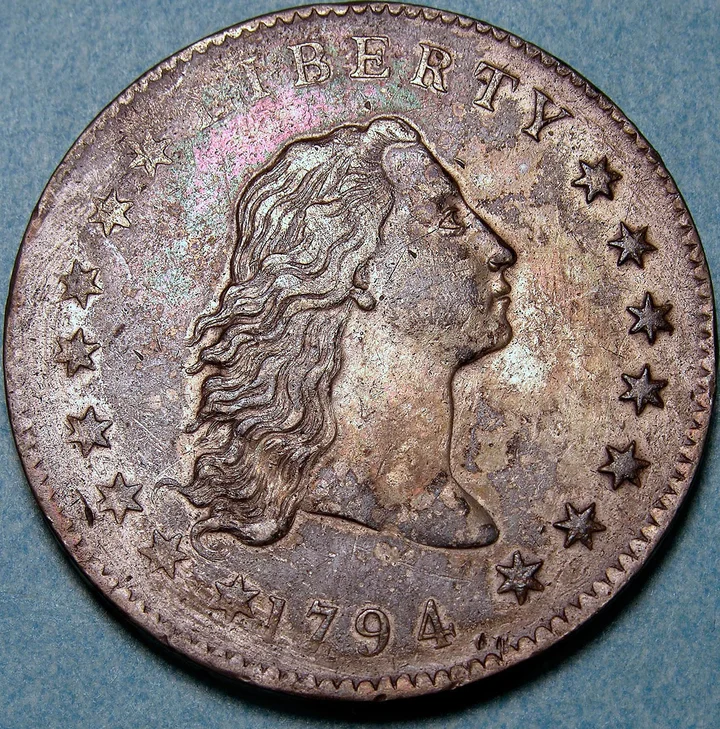
- 1794 Flowing Hair dollar
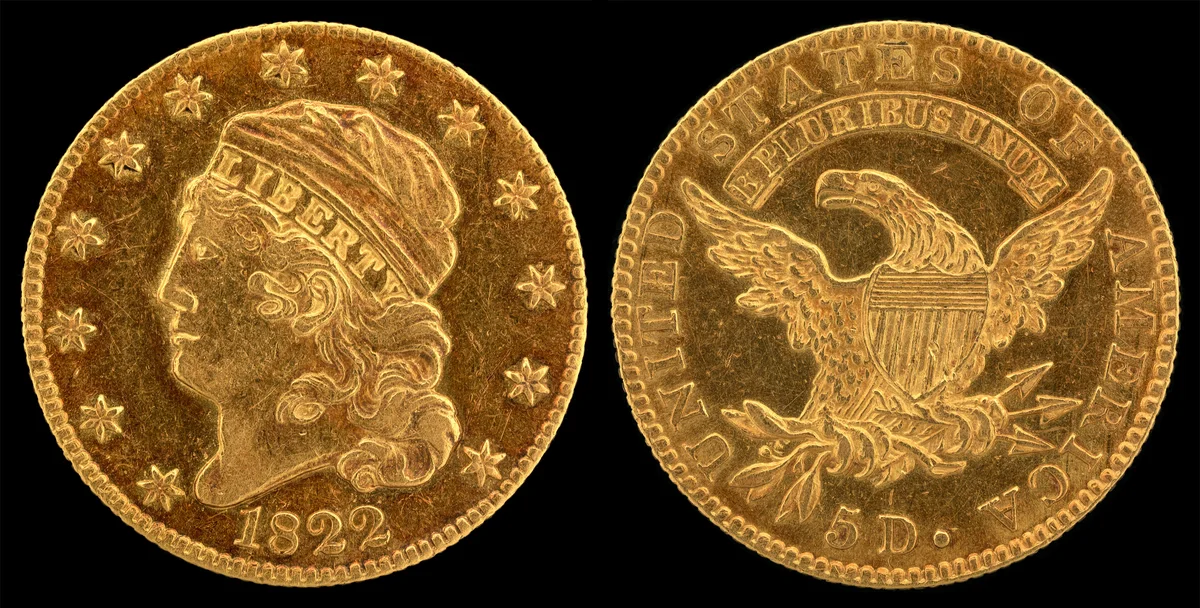
- 1822 half eagle
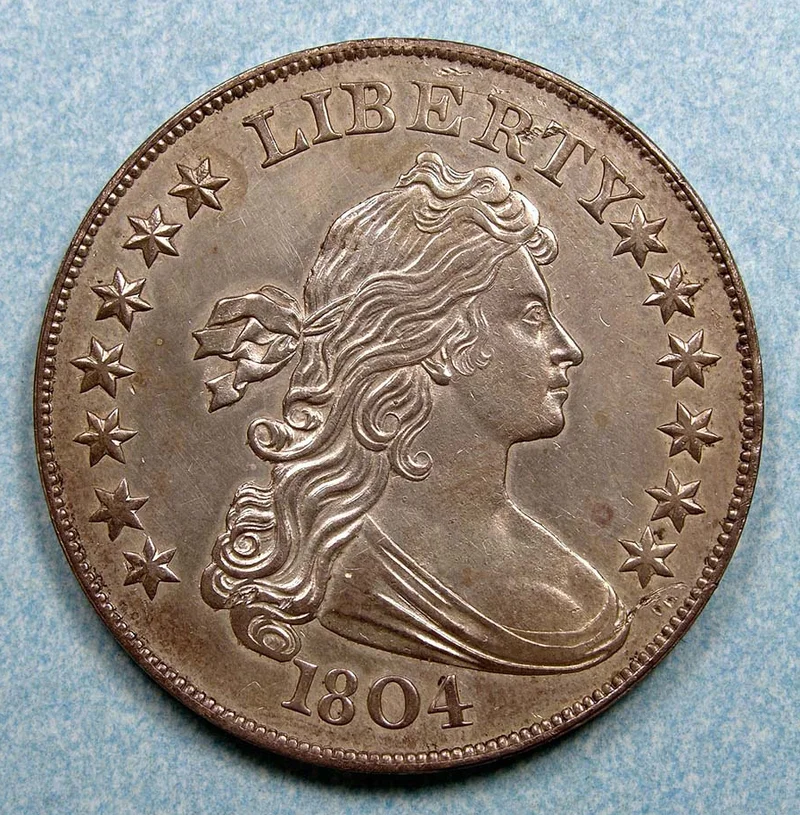
- 1804 silver dollar
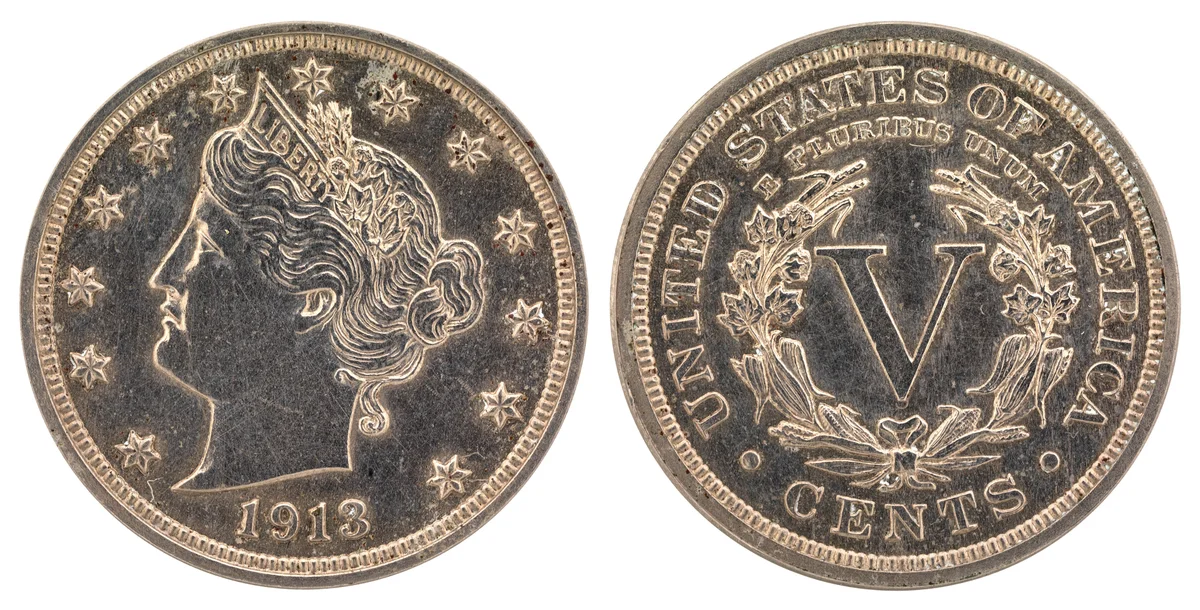
- 1913 Liberty Head nickel
- Valuable coins you can still find in change
- Most valuable coins by year
- Coin value chart by denomination
- How to check coin value
- Free coin value app and scanner
- More collectible value lists
- FAQs
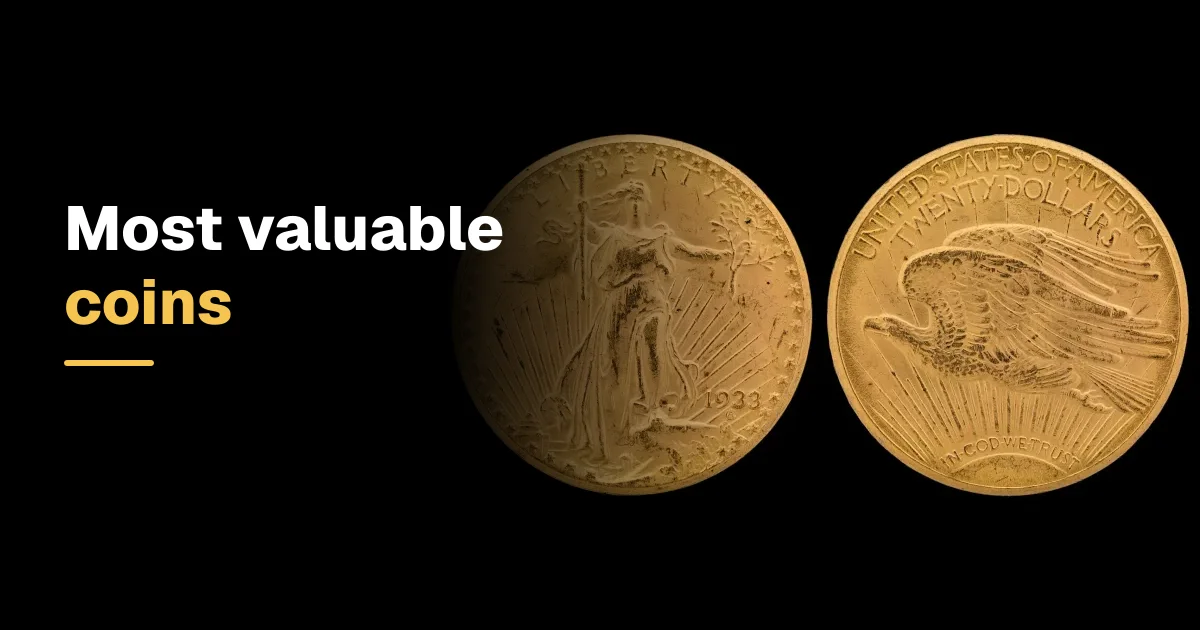
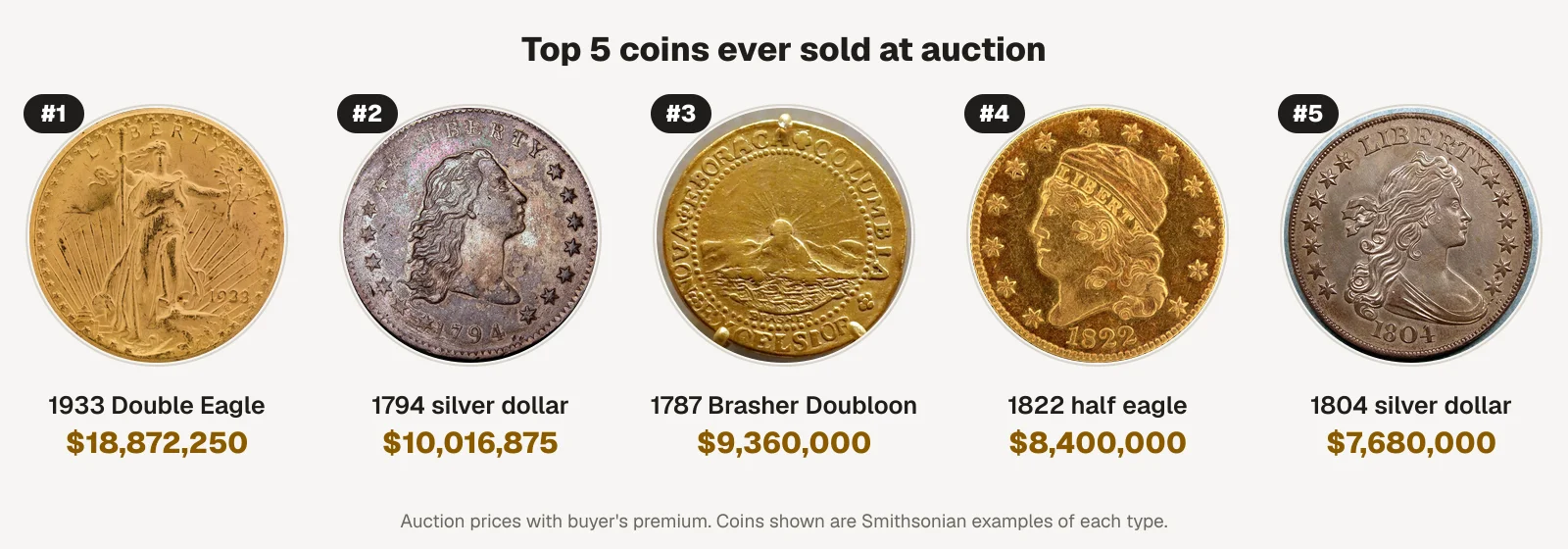
The most valuable coin ever sold at auction is the 1933 Saint-Gaudens Double Eagle, a $20 gold piece that brought $18,872,250 at Sotheby's on June 8, 2021. Next is the 1794 Flowing Hair silver dollar at $10,016,875, the first silver dollar the United States struck.
Every price below is a public auction result with the grade, the auction house and the date of the sale. Private sales are not counted, because nobody outside the deal can check the number. The second table covers coins that still turn up in circulation, with what they bring at real auctions today.
Most valuable coins ever sold at auction
The table lists the highest public auction prices for single coins. Grades are from PCGS or NGC unless the coin was never graded. Prices include the buyer's premium, as the auction houses report them.
| # | Coin | Price | Grade | Sold | Auction house |
|---|---|---|---|---|---|
| 1 | 1933 Saint-Gaudens Double Eagle ($20 gold) | $18,872,250 | PCGS MS65 | June 8, 2021 | Sotheby's, New York |
| 2 | 1794 Flowing Hair silver dollar (silver plug, specimen strike) | $10,016,875 | PCGS SP66 | January 24, 2013 | Stack's Bowers |
| 3 | 1787 Brasher Doubloon, EB on Wing | $9,360,000 | NGC MS65★ (CAC) | January 21, 2021 | Heritage Auctions |
| 4 | 1822 Capped Bust half eagle ($5 gold) | $8,400,000 | PCGS AU50 | March 25, 2021 | Stack's Bowers, Las Vegas |
| 5 | 1804 silver dollar, Class I, "Sultan of Muscat" | $7,680,000 | PCGS PR68 | August 2021 | Stack's Bowers (ANA sale) |
| 6 | 1861 Paquet Reverse double eagle ($20 gold) | $7,200,000 | MS67 (CAC) | August 2021 | Heritage Auctions (ANA sale) |
| 7 | 1794 Flowing Hair silver dollar (Lord St. Oswald, Pogue, Simpson) | $6,600,000 | PCGS MS66+ (CAC) | August 18, 2021 | Heritage Auctions |
| 8 | 1804 silver dollar, Class III (James A. Stack Sr. Collection) | $6,000,000 | PCGS PR65 | December 9, 2025 | Stack's Bowers |
| 9 | 1870-S $3 gold piece (the only one known) | $5,520,000 | PCGS SP50 | January 5, 2023 | Heritage Auctions (FUN, Orlando) |
| 10 | 1804 $10 eagle, Plain 4, proof | $5,280,000 | PCGS PR65+ DCAM (CAC) | January 20, 2021 | Heritage Auctions |
| 11 | 1911 China Hsuan-t'ung "Short-Whiskered Dragon" pattern dollar | $4,880,000 | PCGS SP64+ | June 2026 | Heritage Auctions, Hong Kong |
| 12 | Umayyad gold dinar, 105 AH (723 AD), "Mine of the Commander of the Faithful" | £3,720,000 (about $4.78M) | Not graded | October 2019 | Morton & Eden, London |
| 13 | Kwan Ping silver tael pattern (London Mint, about 1867) | $4,758,000 | PCGS SP66 | October 26, 2026 | Stack's Bowers and Ponterio, Hong Kong |
| 14 | 1913 Liberty Head nickel (Eliasberg, finest of 5 known) | $4,560,000 | PCGS PR66 | August 15, 2018 | Stack's Bowers (ANA, Philadelphia) |
| 15 | 2007 Canadian $1 million Gold Maple Leaf (100 kg) | €3,270,000 (about $4.02M) | Not graded (bullion) | June 25, 2010 | Dorotheum, Vienna |
A few of these coins have their own stories worth knowing.
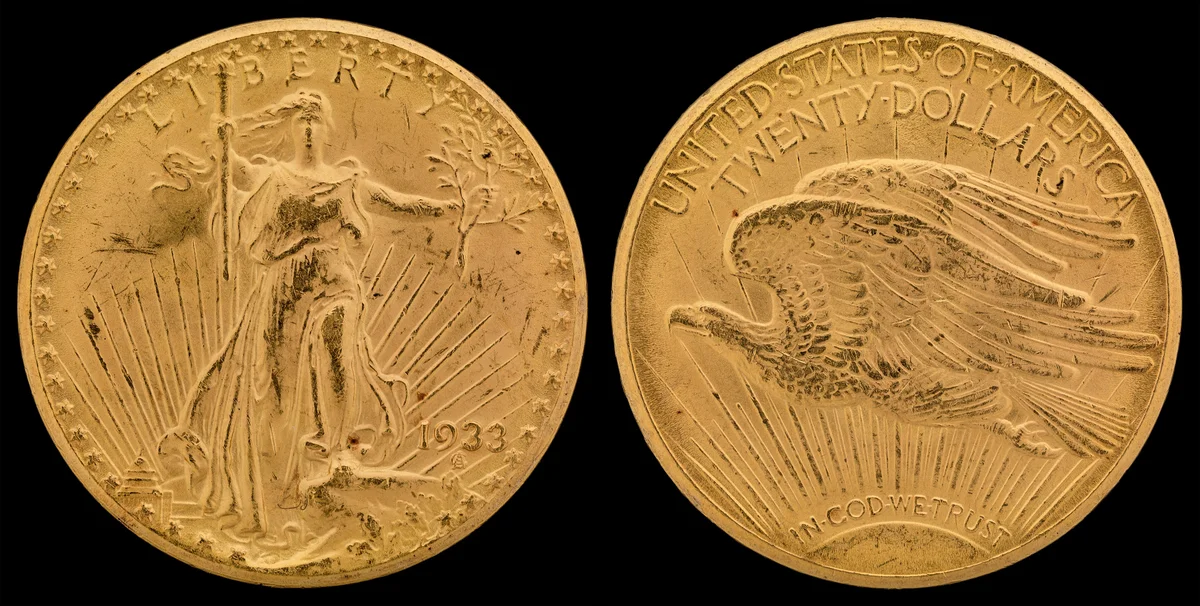
1933 Double Eagle
About 445,000 were struck, but none were released after the US left the gold standard. Almost all were melted. This is the only example the US government allows a private owner to hold. Shoe designer Stuart Weitzman bought it in 2002 for $7,590,020 and sold it in 2021.
1794 Flowing Hair dollar
The SP66 coin is thought to be among the first silver dollars ever struck at the US Mint. It changed hands again in a private sale in 2022 for a reported $12 million, but that price is not in the table because it was not a public auction.
1822 half eagle
Three are known. Two are in the Smithsonian, so the coin in the table is the only one a collector can own.
1804 silver dollar
Despite the date, these were struck in the 1830s as diplomatic gifts. The Class III coin sold in December 2025 was a new find: it was unknown to collectors until the Stack family collection was offered.
1913 Liberty Head nickel
The US Mint never authorized this coin. Five exist, and all were struck without permission.
Valuable coins you can still find in change
These coins were struck for circulation, so they still turn up in pocket change, rolls and old jars. Most of them are errors: a coin struck on the wrong metal, or a die that printed the design twice. The prices are real auction results for coins graded by PCGS or NGC. A raw coin in lower condition sells for less.
Prices as of 2026-11-24.
| Coin | What to look for | Recent auction price | Grade | Sale |
|---|---|---|---|---|
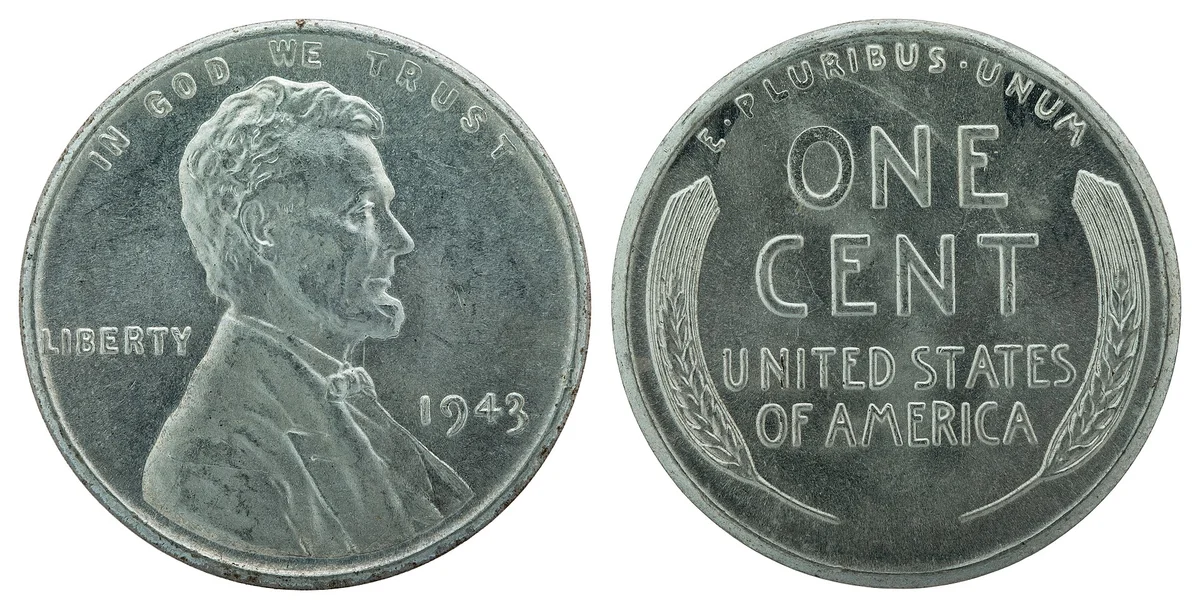
| 1943 bronze (copper) cent | A 1943 cent that is copper colored and does not stick to a magnet (normal 1943 cents are steel) | $336,000 | PCGS AU50 | Heritage Auctions, 2026 |
| 1969-S doubled die obverse cent | Clear doubling on LIBERTY, IN GOD WE TRUST and the date | $28,800 | PCGS MS63BN | Heritage Auctions, August 26, 2025 |
| 1944 steel cent | A gray 1944 cent that sticks to a magnet (normal 1944 cents are copper) | $23,790 | PCGS VF35 | Heritage Auctions, June 29, 2026 |
| 1955 doubled die obverse cent | Strong doubling on the date and lettering, visible without a loupe | $21,960 | PCGS MS64RD | Heritage Auctions, January 15, 2026 |
| 1992-D Close AM cent | The A and M of AMERICA on the back almost touch | $20,700 | PCGS MS64RB | Heritage Auctions (reported by PCGS) |
| 1972 doubled die obverse cent | Doubling on the date and IN GOD WE TRUST | $561 (up to $6,600 in top grades) | PCGS MS66BN (MS67+RD for the top price) | Heritage Auctions, April 21, 2026; Stack's Bowers, spring 2026 |
| 1982 no-P Roosevelt dime | A 1982 dime with no mint mark next to the torch | $415 | PCGS MS66FB | Heritage Auctions, January 2026 |
| 2004-D Wisconsin quarter, Extra Leaf High | An extra leaf on the left side of the corn stalk, curving up | $348 | NGC MS65 | Heritage Auctions, January 25, 2023 |
| 1995 doubled die obverse cent | Doubling on LIBERTY and the date | $89 | PCGS MS67RD | Heritage Auctions, June 2, 2026 |
The 1943 bronze cent is the one coin from circulation that can change a life. About 20 are known from all three mints. A San Francisco example (1943-S) in AU55 was offered by Stack's Bowers in its Spring 2026 Showcase sale at $456,000, and Heritage has sold 1943 bronze cents above $500,000. The catch is that fakes are common: many are steel cents plated with copper, or 1948 cents with the 8 changed to a 3. A magnet test is the first check, but only a PCGS or NGC grade proves the coin.
Most valuable coins by year
The same pattern shows up in each era: the most valuable coins are the ones that almost nobody could keep.
- 1700s. Colonial and early federal coins lead. The 1787 Brasher Doubloon was struck privately by a New York goldsmith before the US Mint existed. The 1794 Flowing Hair dollar was the first US silver dollar.
- 1800s. Gold dominates. The 1822 half eagle, the 1870-S $3 gold piece and the 1861 Paquet double eagle all survive in one to three examples. The 1804 dollar, struck in the 1830s, is the most famous silver coin of the century.
- 1900s to 1933. The 1913 Liberty Head nickel and the 1933 Double Eagle are both coins the government never released. Their value comes from that story as much as from the metal.
- 1940s to 1970s. Mint errors take over. The 1943 bronze cent, 1944 steel cent, 1955 and 1969-S doubled dies came out of normal production, so they can still be found.
- 1980s to today. Prices fall sharply. The 1982 no-P dime, the 1992 Close AM cent and the 2004-D Wisconsin quarters are the error coins worth checking for. The 2025 Omega penny sets are the exception: special coins made to sell at auction, not coins found in change.
Coin value chart by denomination
This chart gives the highest public auction price for each US denomination with a verified record. A typical coin of each type is worth far less, often face value or the metal value only.
| Denomination | Record coin | Auction price | Year sold |
|---|---|---|---|
| $20 gold (double eagle) | 1933 Saint-Gaudens | $18,872,250 | 2021 |
| Silver dollar | 1794 Flowing Hair, SP66 | $10,016,875 | 2013 |
| $5 gold (half eagle) | 1822 Capped Bust | $8,400,000 | 2021 |
| $3 gold | 1870-S | $5,520,000 | 2023 |
| $10 gold (eagle) | 1804 Plain 4 proof | $5,280,000 | 2021 |
| Nickel | 1913 Liberty Head | $4,560,000 | 2018 |
| Cent (from circulation) | 1943-S bronze, AU55 | $456,000 | 2026 |
Silver coins dated 1964 or earlier (dimes, quarters, half dollars) are 90% silver, so even a worn one is worth more than face value. Check the silver price on the day you sell.
How to check coin value
Use these steps in order. Most coins stop at step 2.
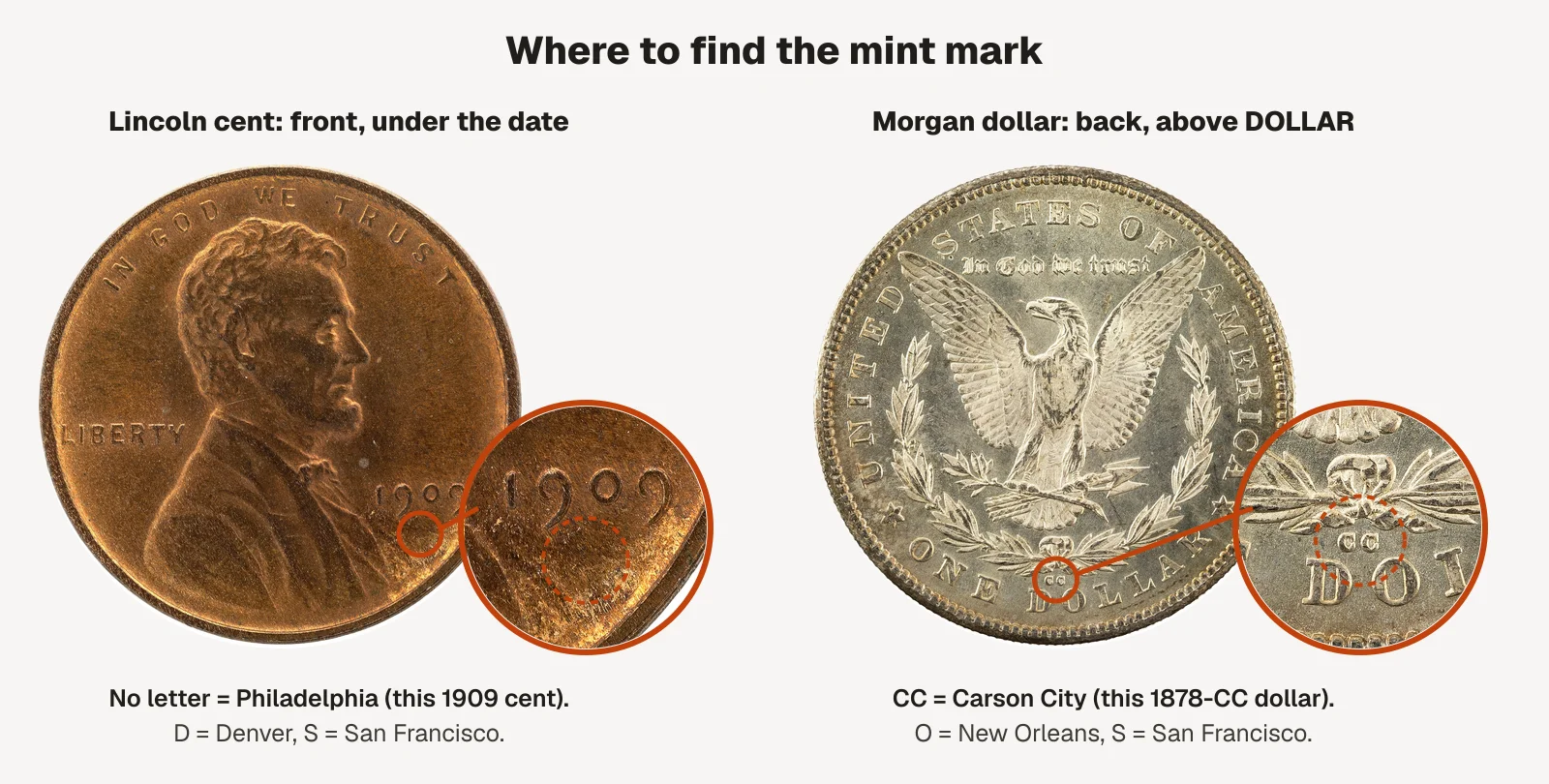
- Read the date and mint mark. The mint mark is a small letter (P, D, S, W or CC). On Lincoln cents it is under the date. On Roosevelt dimes it is above the date. On Morgan dollars it is on the back, above the word DOLLAR. No mark usually means Philadelphia.
- Compare it to the tables above. If the date and mint mark do not match a known rare coin or error, the coin is very likely worth face value, or its metal value if it is old silver or gold.
- Check the error. Use a magnet for 1943 and 1944 cents. Use a 5x to 10x magnifier for doubled dies and the Close AM. Compare with the photos in PCGS CoinFacts.
- Estimate the grade honestly. Wear on the high points (cheek, hair, eagle's breast) lowers the grade, and the price drops fast. Never clean a coin: cleaning cuts its value more than wear.
- Look up real auction results. Search the coin and grade in the free auction archives of Heritage, Stack's Bowers or PCGS CoinFacts. Asking prices in listings are not sale prices.
- Send a valuable coin for grading. If the coin could be worth more than a few hundred dollars, submit it to PCGS or NGC. A graded coin in a sealed holder is what auction houses and buyers trust.
If a coin came with a PCGS or NGC holder, type the certificate number into the grader's cert lookup (linked in the sources below). It shows the grade, the photo on file and the population. Fake holders exist, so check before you pay.
Free coin value app and scanner
The two big grading services both offer free apps. They are the only coin apps here because their prices come from their own price guides and real auction records, not from guesses.
- PCGS CoinFacts app (iPhone and Android, free). Price guide values for US coins, population counts by grade, varieties, and public auction results for PCGS and NGC coins. The prices download to the phone, so the app works offline at a coin show. The web version is PCGS CoinFacts, and all PCGS apps are listed on the PCGS apps page.
- NGC app (iPhone and Android, free). Scan the label of an NGC holder to see the grade, the NGC Census population and NGC Price Guide values for US coins. Get it from the App Store or Google Play.
- US Mint website (free). Official mintage figures and the history of each coin, useful to see how many of a date were made.
No app can grade a coin from a photo. A phone scanner can tell you which coin you have, not its exact grade, and grade is what sets the price. To find out what an unknown coin is, a reverse image search with a sharp photo of both sides is often the fastest first step. Then check the result in CoinFacts.
More collectible value lists
- Most valuable Pokémon cards
- Most valuable Magic: The Gathering cards
- Most valuable Yu-Gi-Oh! cards
- Most valuable baseball cards
- Most valuable Hot Wheels
FAQs
What is the most valuable coin in the world?
What is the most valuable penny?
Are old coins worth money?
How do I know if my coin is rare?
Where can I sell a valuable coin?
Is the 1943 steel penny worth anything?
Can the US Mint tell me what my coin is worth?

Amit loves new tech and apps that make life easier, he writes about apps, games and useful websites on TheTechBasket.