Snapchat planets are the badges behind Best Friends and Friends on Snapchat+. Tap the badge on a friend's profile and you see which of their top eight you are, ranked like the real solar system from Mercury (closest) to Neptune (eighth).
If you manage social apps on Android, see our phone customization guide or username checker roundup for handle hunting across platforms.
What the Friend Solar System is
The Friend Solar System is a Snapchat+ feature. On a friend's profile you see one of two badges:
- Best Friends (gold outline): you are in each other's top eight.
- Friends: you are in their top eight, but they are not in yours.
Tap the badge and Snapchat shows a planet. Your friend is the Sun; the planet is your rank. Snapchat weights snaps highest, then chats, story replies, reactions, and streak consistency. The list is private: nobody else sees who your Mercury is.
Quick reference table
| Rank | Planet | Badge look | Meaning |
|---|---|---|---|
| 1 | Mercury | Red planet, red hearts | Their #1 best friend |
| 2 | Venus | Sandy planet, mixed-color hearts | #2 |
| 3 | Earth | Blue-green, moon, stars, red hearts | #3 |
| 4 | Mars | Red, stars, purple and blue hearts | #4 |
| 5 | Jupiter | Orange with stripes and stars | #5 |
| 6 | Saturn | Orange or yellow with a ring | #6 |
| 7 | Uranus | Plain green, no hearts | #7 |
| 8 | Neptune | Plain blue, no hearts | #8 |
Colour shortcut: red with only red hearts is Mercury; red with purple or blue hearts and stars is Mars. Plain blue with no extras is Neptune. Orange with a ring is Saturn; orange with stripes is Jupiter.
Every Snapchat planet in order
1. Mercury
#1 best friend

Closest to the Sun. Red planet with red hearts. You are their number one best friend by snap and chat volume.
2. Venus
#2

Second orbit. Sandy brown planet with yellow, pink, and blue hearts.
3. Earth
#3

Third orbit. Blue and green with a moon, stars, and red hearts.
4. Mars
#4

Fourth orbit. Red like Mercury, but with stars and purple or blue hearts instead of all-red hearts.
5. Jupiter
#5

Fifth orbit. Large orange planet with dark stripes and stars. No hearts.
6. Saturn
#6
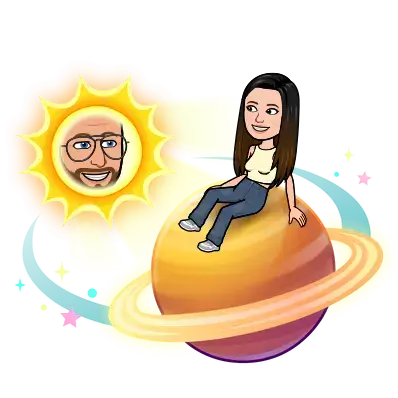
Sixth orbit. The only planet with a ring. Orange or yellow with stars.
7. Uranus
#7

Seventh orbit. Plain green planet with no hearts.
8. Neptune
#8

Eighth and last orbit. Plain blue planet. You are still in their top eight, just at the edge.
How to see your planet
- Subscribe to Snapchat+ (monthly or annual price is shown in Settings > Snapchat+ before you buy; it varies by country and app store).
- Open a chat, tap the friend's name or Bitmoji for their profile.
- Tap Best Friends or Friends under their name.
- The planet shown is your rank in their solar system.
Only you need Snapchat+. Your friend does not need a subscription. You can only check profiles where you already appear in their top eight, because otherwise there is no badge to tap.
How to move closer to the Sun
There is no manual setting. Planets track the Best Friends algorithm. To rank higher:
- Send snaps, not just chats. Snaps count most.
- Reply to stories and react to their snaps.
- Keep a streak going. Steady activity beats a short burst.
- Make it mutual. The ranking weighs what they send you too.
Rankings update continuously. A planet can shift within days if habits change.
How many Snapchat planets are there?
Can I see planets without Snapchat+?
What does the Sun mean on Snapchat?
Why did my planet change?
What is the difference between Best Friends and Friends badges?
Does Snapchat notify people when I check their planet?

I write as a writer, as someone very familiar with the Internet, as someone who is completely at ease with current technology and the way it is transforming the social fabric of the globe, the business world in particular.