On this page
- Quick Pick: Find Your Distro in 30 Seconds
- Best Linux Distros for Beginners
- Linux Mint
- Ubuntu 26.04 LTS “Resolute Raccoon”
- Zorin OS
- Best Linux Distros for Gaming
- Bazzite
- Nobara Project
- Garuda Linux
- Best Linux Distros for Developers
- Fedora Workstation
- Arch Linux
- EndeavourOS
- Best Linux Distros for Privacy and Security
- Tails
- Qubes OS
- Whonix
- Best Lightweight Linux Distros for Old or Low-End Hardware
- MX Linux
- antiX
- Puppy Linux
- Best Linux Distros for Laptops
- Fedora Workstation (best overall for laptops)
- Ubuntu 26.04 LTS (best for certified hardware)
- Pop!OS 24.04 (best for NVIDIA gaming laptops)
- Laptop checklist before you install
- Best Immutable and Atomic Linux Distros
- Fedora Silverblue
- Universal Blue (Bluefin / Aurora)
- NixOS
- Best Linux Distros for Servers
- Ubuntu Server
- Debian
- Rocky Linux
- AlmaLinux
- How to Choose: A Simple Decision Framework
- One More Tip
- FAQs
- Which Linux distro is best for complete beginners?
- What is the most lightweight Linux distro?
- What is the best Linux distro for gaming?
- What is the best Linux for a laptop?
- Can I game on Linux in 2026?
- Is Linux a good replacement for Windows 10?
- Is Ubuntu still relevant in 2026?
- What is an immutable Linux distro?
- Which distro is best for a Raspberry Pi or ARM device?
- Do I need an antivirus on Linux?
There are over 600 active Linux distributions. Most “best distro” lists throw 10 names at you and call it a day. This one is different.
Below is a quick-pick table that matches your situation to a distro in seconds. After that, every recommendation gets a proper breakdown so you understand exactly why it made the cut and whether it fits your workflow. Versions were checked against each project's official site in October 2026.
Quick Pick: Find Your Distro in 30 Seconds
Skip the entire article if you already know what you need.
| If you are… | Go with | Why |
|---|---|---|
| Switching from Windows for the first time | Linux Mint | Familiar layout, works out of the box, zero learning curve |
| A student or general desktop user | Ubuntu 26.04 LTS | Biggest community, best documentation, 5-year support |
| A gamer who wants a console-like experience | Bazzite | Gaming-optimised Fedora with all codecs and drivers included |
| A gamer who also uses the desktop | Nobara | Gaming-tuned Fedora that is still a normal, editable desktop |
| Installing Linux on a laptop | Fedora Workstation | Good battery tuning, touchpad gestures, vendor-supported on Framework |
| A developer or sysadmin | Fedora Workstation | Cutting-edge packages, Wayland-native, upstream-first |
| Someone who wants total control | Arch Linux | You build it, you own it, rolling release |
| Arch-curious but want a safety net | EndeavourOS | Real Arch repos, graphical installer, minimal extras |
| Handling sensitive or activist work | Tails | Amnesic, Tor-routed, leaves no trace |
| A security professional | Qubes OS | Isolation via compartmentalized VMs |
| Reviving a 10+ year old laptop | MX Linux | Lightweight Debian 13 base, Xfce desktop, great tools |
| Reviving a truly ancient machine | antiX | Runs on 512 MB RAM, systemd-free |
| Looking for an unbreakable desktop | Fedora Silverblue | Immutable, atomic updates, Flatpak-first |
| Running a web server or cloud instance | Ubuntu Server | Widest cloud support, massive docs |
| Running enterprise/RHEL workloads | Rocky Linux | 1:1 RHEL binary compatible, community-governed |
Now, the full breakdowns.
Best Linux Distros for Beginners
If you have never used Linux before, the install process and the first 30 minutes will make or break your experience. A good beginner distro gets four things right:
- A graphical installer that can set up dual boot next to Windows without manual partitioning.
- Drivers and codecs that just work, including Wi-Fi, NVIDIA graphics and video playback.
- A familiar desktop: a taskbar, a start menu and a settings app you can find without a tutorial.
- A long support window, so you are not forced into a major upgrade every six months.
These three distros nail that first impression.
Linux Mint
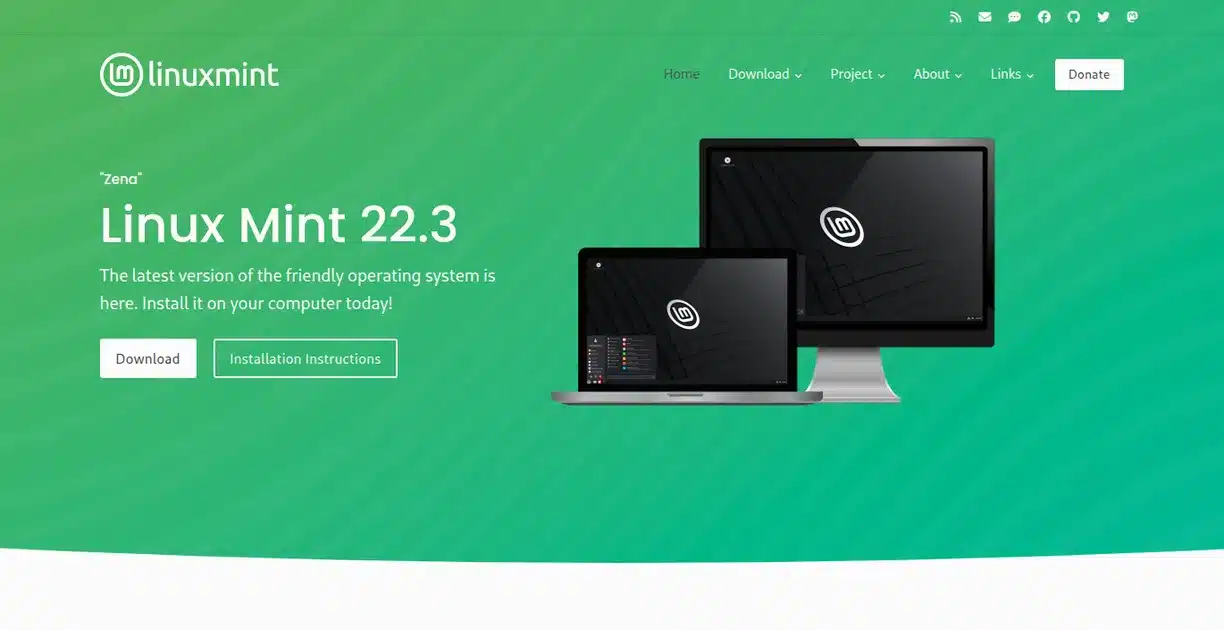
Linux Mint is the distro most often recommended to people leaving Windows, and for good reason. The Cinnamon desktop looks and behaves almost exactly like Windows 10: taskbar at the bottom, start menu in the corner, system tray on the right. There is almost nothing to “learn.”
Mint ships with multimedia codecs pre-installed, a built-in backup tool, and an update manager that explains every update in plain English. It is based on Ubuntu LTS, so the software library is enormous and community support is excellent.
The current release is Linux Mint 22.3 "Zena", built on Ubuntu 24.04 and supported until April 2029. Linux Mint 23, moving to the Ubuntu 26.04 base with full Wayland support in Cinnamon and a new installer, is planned for December 2026. You can install 22.3 today and upgrade in place when 23 lands.
Best for: Anyone switching from Windows who just needs a computer that works.
Current version: 22.3 "Zena"
Desktop: Cinnamon (also available in MATE and Xfce)
Base: Ubuntu 24.04 LTS
Support: Until April 2029
Ubuntu 26.04 LTS “Resolute Raccoon”
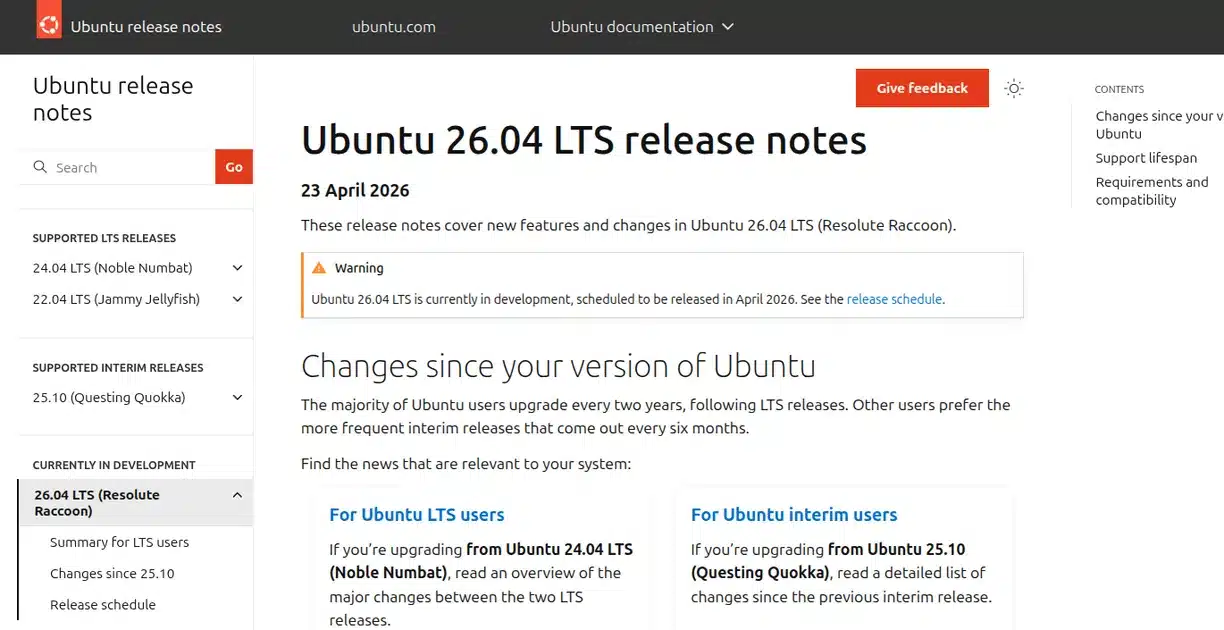
Ubuntu 26.04 is a big release. It ships with Linux kernel 7.0, native AMD ROCm support for AI/ML workloads, and full x86-64-v3 architecture optimization for modern CPUs. The desktop runs GNOME on Wayland by default, and the first-boot experience has been streamlined significantly.
The real advantage of Ubuntu is its ecosystem. If you search for “how to do X on Linux,” the top result is almost always Ubuntu-specific. That matters more than most people realize, especially when you are troubleshooting at midnight.
Best for: General desktop use, students, anyone who values massive community support.
Desktop: GNOME
Kernel: 7.0
Support: 5 years standard, up to 15 years with Ubuntu Pro
Zorin OS
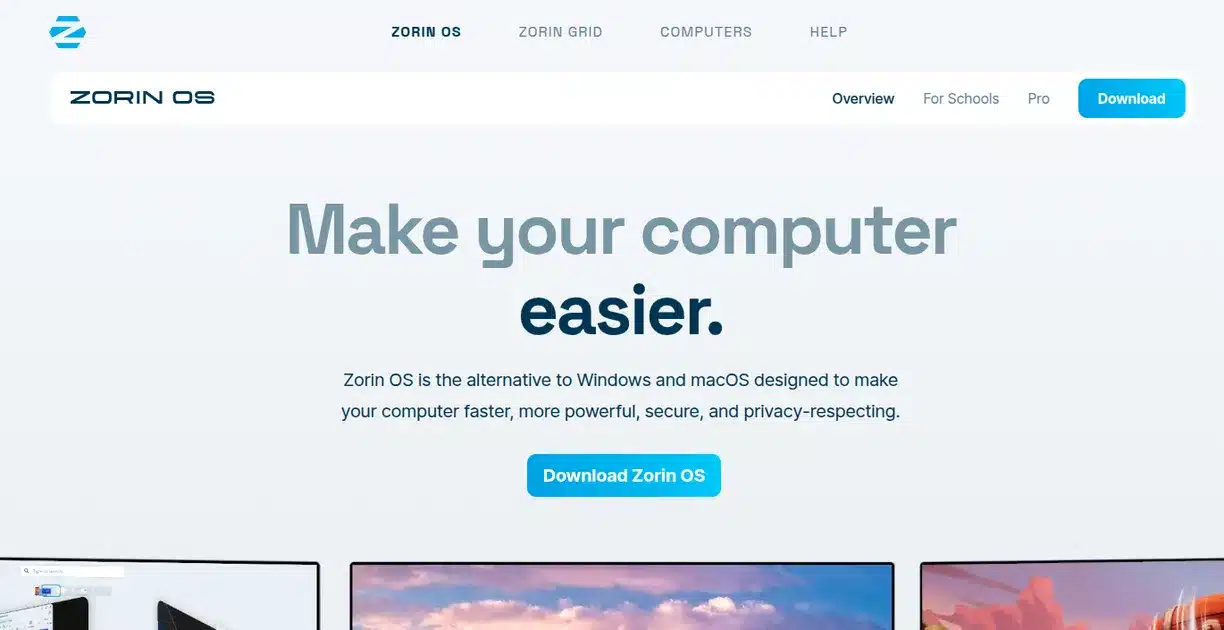
Zorin OS is built specifically for people who find even Ubuntu intimidating. Its “Zorin Appearance” tool lets you switch the entire desktop layout to mimic Windows 11, Windows Classic, macOS, or GNOME with a single click. It also bundles a compatibility layer for running some Windows applications.
The Pro edition includes extra desktop layouts and pre-installed creative apps, but the free Core edition is more than enough for most users. Zorin OS 18.1 widened that Windows app detection to more than 240 programs, and a separate Lite edition (Xfce) exists for older PCs.
Best for: Non-technical users, anyone who wants a polished look out of the box.
Current version: 18.1
Desktop: Modified GNOME (Lite edition: Xfce)
Base: Ubuntu 24.04 LTS
Minimum specs: 64-bit dual-core CPU, 2 GB RAM, 15 GB disk (Core)
Best Linux Distros for Gaming
Linux gaming in 2026 is genuinely viable for most people, thanks largely to Valve’s Proton compatibility layer and the Steam Deck’s success. That said, a few multiplayer titles with kernel-level anti-cheat (Valorant, Fortnite, Destiny 2) still do not work. Check ProtonDB for your library before committing.
So what is the best distro for gaming? It depends on how you play:
| You play… | Best gaming distro | Why |
|---|---|---|
| On a TV or handheld (Steam Deck, ROG Ally, Legion Go) | Bazzite | Boots into Steam Gaming Mode, atomic updates you cannot break |
| At a desk, on the same PC you work on | Nobara Project | Normal Fedora desktop with gaming patches and drivers pre-installed |
| On Arch, and you like to tinker | Garuda Linux | Gaming edition with Steam, Lutris and snapshots out of the box |
| On a mainstream distro you already use | Fedora 44 or Ubuntu 26.04 | Install Steam, enable Proton, done. Fedora 44 adds the NTSYNC module for faster Windows game sync |
Bazzite
Bazzite is the closest thing to SteamOS for desktop PCs and third-party handhelds. It is built on Fedora’s atomic base through the Universal Blue project, which means the system image is immutable; you are unlikely to break it through normal use.
It ships with Steam, Lutris, and controller support pre-configured. HDR, VRR (Variable Refresh Rate), and hybrid GPU switching work out of the box. If you want to plug in a controller and play from your couch, this is the pick. It supports x86 handhelds such as the Steam Deck, ASUS ROG Ally and Lenovo Legion Go, and comes in KDE and GNOME desktop flavours.
Best for: Couch gaming, handheld PCs, a console-like “just play” experience.
Base: Fedora Atomic (Kinoite for KDE, Silverblue for GNOME)
Update model: Atomic image updates
Nobara Project
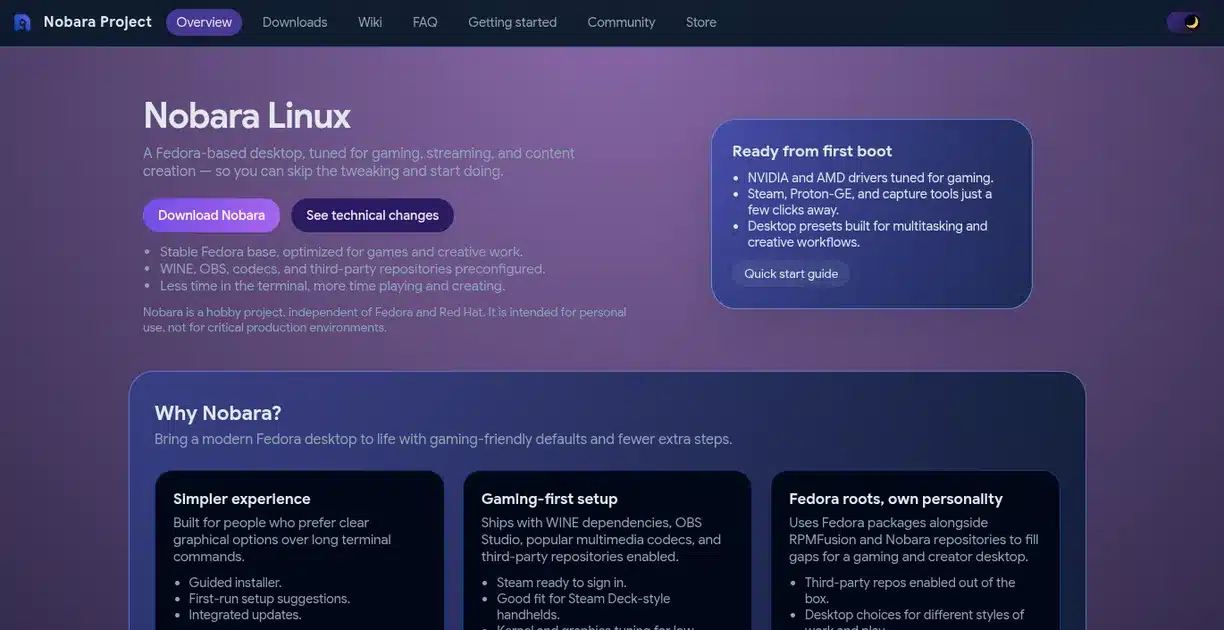
Nobara is developed by GloriousEggroll, the same person behind Proton-GE (the community fork of Proton that fixes compatibility issues faster than Valve’s official builds). That lineage matters. Nobara is Fedora with gaming-specific kernel patches, pre-installed codecs, lower input latency tweaks, and the right drivers ready from the start.
Unlike Bazzite, Nobara is a traditional desktop distro, not immutable. You get a full Fedora experience with KDE or GNOME, plus all the gaming optimisations layered in. If you game and also do real work on the same machine, Nobara is the sweet spot.
Best for: Desktop gamers who also want a full workstation.
Desktop: KDE Plasma or GNOME
Base: Fedora
Garuda Linux
Garuda is the Arch-based option for gamers. The “Dr460nized Gaming” edition comes with Steam, Lutris, emulators, and performance tools pre-installed. It uses a Zen-tuned kernel and BTRFS with automatic snapshots, so you can roll back if a bleeding-edge update breaks something.
The trade-off: Arch’s rolling-release nature means occasional manual intervention after updates. Garuda is best for people who enjoy tinkering and want absolute system performance.
Best for: Power users and tinkerers who want Arch + gaming.
Base: Arch Linux (rolling release)
Best Linux Distros for Developers
Fedora Workstation
Fedora is the developer’s distro. It tracks upstream projects closely, meaning you get recent versions of compilers, interpreters, container tools, and libraries without adding PPAs or third-party repos. Fedora 44, released on April 28, 2026, ships with GNOME 50 (Wayland-only), Linux kernel 6.19 and KDE Plasma 6.6 for the KDE edition. Fedora 45 is due in late October 2026.
Podman (rootless containers), Toolbox (development containers), and SELinux are baked in. If your workflow involves Docker, Kubernetes, or anything cloud-native, Fedora makes that frictionless.
Best for: Software engineers, DevOps, cloud-native development.
Current version: 44 (45 due late October 2026)
Desktop: GNOME 50 (Wayland-only)
Release model: ~6 months, with ~13 months of support per release
Arch Linux
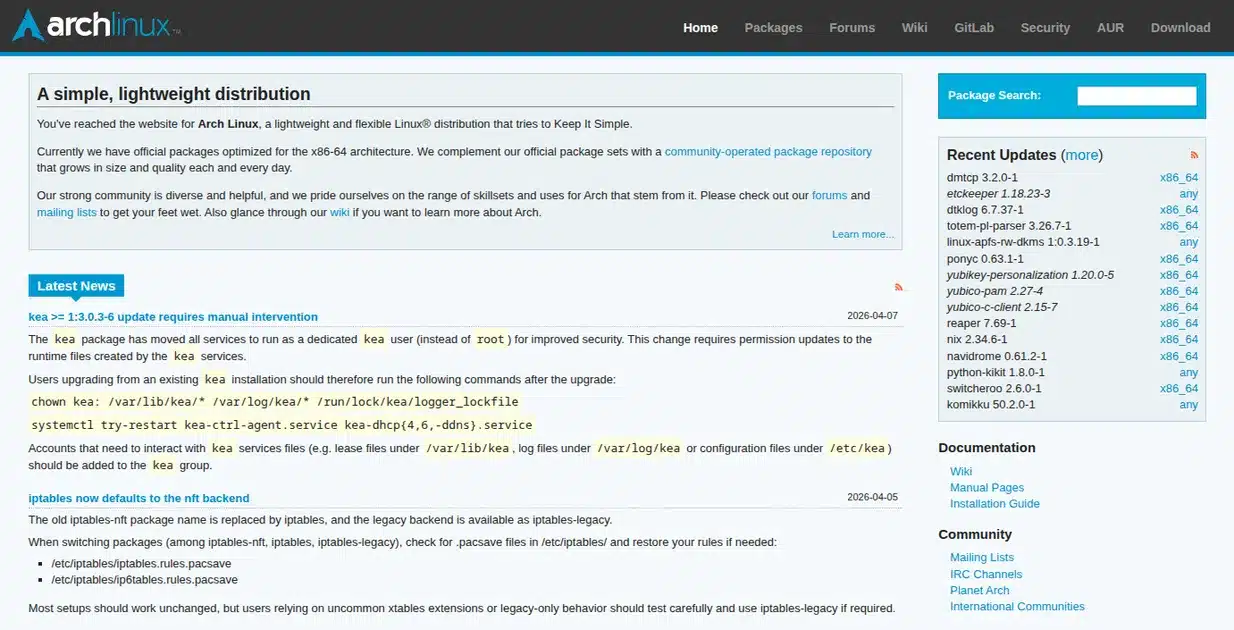
Arch is not for everyone, and that is the point. You install it from a command line. You choose every component yourself: kernel, display server, desktop environment, shell. The result is a system with nothing you did not explicitly ask for.
The Arch Wiki is the single best piece of Linux documentation ever written. Seriously. Even users of other distros reference it daily. The AUR (Arch User Repository) gives you access to virtually any piece of software that exists.
The archinstall script has made the installation process more accessible, but Arch still expects you to understand what you are doing. That is not a flaw; it is the design philosophy.
Best for: Developers who want to understand their system completely.
Release model: Rolling release
Package manager: pacman + AUR
EndeavourOS
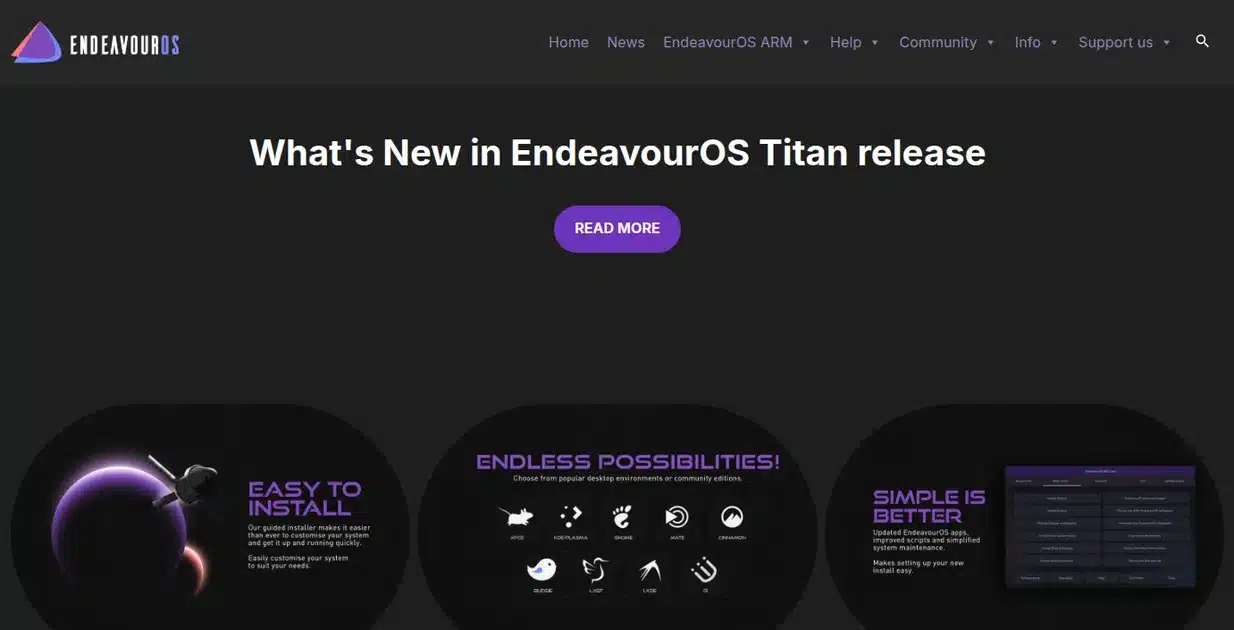
EndeavourOS is “Arch, but the hard parts are done for you.” It uses the real Arch repositories (not forked ones like Manjaro), so any Arch tutorial works verbatim. The graphical Calamares installer gets you to a working desktop in about 15 minutes.
You choose your desktop environment during installation (KDE, GNOME, Xfce, Sway, BSPWM, and more), and EndeavourOS adds a thin layer of helpful scripts without modifying the Arch base.
Best for: Developers who want Arch’s power without the manual install ritual.
Base: Arch Linux (real repos)
Release model: Rolling release
Best Linux Distros for Privacy and Security
These distros are not for casual use. They are purpose-built for people with genuine threat models: journalists, researchers, activists, and security professionals.
Tails
Tails is an amnesic live operating system. You boot it from a USB stick, do your work, and when you shut down, everything is erased. It was never on your hard drive. All traffic is forced through the Tor network by default.
Tails is not designed to be a daily driver. It is a tool you reach for when you need a session that leaves zero forensic trace on the hardware you used.
Best for: Journalists, activists, anonymous browsing sessions.
Runs from: USB (live, amnesic)
Network: All traffic routed through Tor
Qubes OS
Qubes takes a fundamentally different approach: security through compartmentalisation. Every application, browser, or task runs in its own isolated virtual machine (“qube”). If your browser is compromised, the attacker is trapped in that one VM; they cannot reach your files, your email client, or your other qubes.
The learning curve is steep, and you need modern hardware with good virtualization support (Intel VT-x/VT-d or AMD-Vi). But if your threat model demands it, nothing else comes close.
Best for: Security researchers, high-risk professionals handling sensitive data.
Architecture: Xen hypervisor, compartmentalised VMs
Hardware: Requires a modern CPU with hardware virtualisation
Whonix
Whonix splits itself into two virtual machines: a Gateway (which handles all Tor connections) and a Workstation (where you do your work). Even if the Workstation is fully compromised, your real IP address cannot leak because it never has direct network access.
Whonix can run standalone or inside Qubes OS for layered security. It is the best option if your primary concern is IP/identity anonymity rather than forensic trace avoidance.
Best for: Anonymity-focused work, long-running secure sessions.
Architecture: Gateway + Workstation VMs
Best Lightweight Linux Distros for Old or Low-End Hardware
Before you throw away that old laptop, try one of these. Modern web browsers are the real bottleneck on old machines, not the OS. A lightweight Linux distro saves memory mainly through its desktop: Xfce, IceWM and Fluxbox use a fraction of the RAM that GNOME or KDE Plasma need.
| Lightweight distro | Good for | Desktop | 32-bit PCs |
|---|---|---|---|
| MX Linux | 2 GB RAM machines from roughly 2012 onward | Xfce, KDE, Fluxbox | No (64-bit only since MX 25) |
| Zorin OS Lite | Windows switchers on older hardware | Xfce, Windows-like layout | No |
| antiX | Under 1 GB RAM, very old PCs | IceWM, Fluxbox | Yes |
| Puppy Linux | Running fully from RAM off a USB stick | Varies by build (often JWM) | Some builds |
MX Linux
MX Linux is based on Debian Stable and uses Xfce by default. It is not the absolute lightest distro on this list, but it hits the best balance between being lightweight and still feeling like a complete, modern desktop.
It ships with a set of custom “MX Tools” for managing system snapshots, package installation, and USB live-disk creation. If your machine has at least 2 GB of RAM and was made in the last decade, MX Linux will run well on it. MX Linux 25 "Infinity" moved to Debian 13 "Trixie" and added Secure Boot support, so it installs on newer laptops without disabling firmware security.
Best for: Machines from 2012-2018, users who want a full desktop experience on modest hardware.
Current version: 25 "Infinity"
Desktop: Xfce (also available in KDE and Fluxbox)
Base: Debian 13 "Trixie"
Minimum RAM: 1 GB (2 GB recommended)
antiX
antiX goes even leaner. It does not use systemd, ships with IceWM or Fluxbox, and can run comfortably on machines with 512 MB of RAM. It will not win any beauty contests, but it will turn a 15-year-old ThinkPad into a functional web browsing and writing machine. The current antiX 26.1 still ships 32-bit images, which very few distros do anymore.
Best for: Truly ancient hardware, sub-1 GB RAM machines, 32-bit PCs.
Current version: 26.1
Desktop: IceWM / Fluxbox
Base: Debian
Minimum RAM: 256 MB
Puppy Linux
Puppy Linux loads entirely into RAM. Once booted, you can remove the USB stick and the system keeps running. On a machine with 2 GB of RAM, it feels impossibly fast because there is zero disk I/O for the operating system itself.
It is quirky, opinionated, and unlike any other Linux distro. But for reviving hardware that would otherwise be e-waste, it is remarkable.
Best for: Extremely old machines, portable/bootable toolkit.
Runs from: RAM (after booting from USB/CD)
Best Linux Distros for Laptops
On a laptop, the distro matters less than how well it handles the hardware around it: battery life, suspend and resume, Wi-Fi, touchpad gestures, the fingerprint reader and switching between integrated and dedicated graphics. The best Linux for a laptop is the one your laptop maker already tests.
Fedora Workstation (best overall for laptops)
Fedora ships new kernels quickly, so recent Intel, AMD and Qualcomm Wi-Fi chips, webcams and power-saving features land here first. GNOME 50 has smooth multi-finger touchpad gestures, fractional scaling for high-resolution screens works well on Wayland, and power profiles (Power Saver, Balanced, Performance) are one click away in the system menu. Framework names Fedora as one of its two officially supported distros, and several Lenovo ThinkPad models ship it from the factory. See the Fedora Workstation breakdown above.
Ubuntu 26.04 LTS (best for certified hardware)
Ubuntu has the longest list of certified laptops, including many Dell, HP and Lenovo business models, and it is Framework's other officially supported distro. The certification means suspend, Wi-Fi, audio and the fingerprint reader were tested on that exact model. If your laptop is on the Ubuntu certified list, start here. See the Ubuntu breakdown above.
Pop!_OS 24.04 (best for NVIDIA gaming laptops)
Pop!_OS from System76 offers a dedicated NVIDIA download with the driver pre-installed, and makes switching between integrated and NVIDIA graphics a menu option. Version 24.04 LTS introduced System76's own COSMIC desktop, which tiles windows with the keyboard and is light on resources. If your laptop has an NVIDIA GPU and you do not want Bazzite's console-style setup, this is the easy route.
Laptop checklist before you install
Boot the distro from a live USB and check each of these before you wipe anything:
- Wi-Fi and Bluetooth connect and stay connected
- Closing the lid suspends the laptop, and opening it wakes it with Wi-Fi back on
- Brightness and volume keys work
- Touchpad gestures and the built-in webcam work
- Battery percentage shows, and the power profile switch is present
- External monitor works over HDMI or USB-C
If you are buying a new machine for Linux, our best Windows laptops guide covers several ThinkPad and Dell models that are also Linux-certified.
Best Immutable and Atomic Linux Distros
Immutable distros are the fastest-growing category in Linux right now. The core idea: the system files are read-only. You cannot accidentally break your OS. Updates happen atomically, and if something goes wrong, you roll back to the previous working state in seconds.
Fedora Silverblue
Silverblue is Fedora’s immutable GNOME desktop. The base system is managed via rpm-ostree and updated as a single atomic image. You install graphical apps through Flatpak and CLI/dev tools through Distrobox (which spins up a mutable container for that purpose).
This model sounds restrictive, but in practice, it means your OS is nearly impossible to break. It is a genuine “set it and forget it” workstation.
Best for: Users who want a stable, low-maintenance GNOME desktop.
Desktop: GNOME
Apps: Flatpak (GUI), Distrobox (CLI/dev tools)
Base: Fedora (atomic)
Universal Blue (Bluefin / Aurora)

Universal Blue builds custom images on top of Fedora Atomic. Bluefin targets developers (integrates Homebrew and dev containers), while Aurora provides the same experience with KDE Plasma instead of GNOME.
These feel like “managed” workstations in the best sense. Updates are automatic and invisible. You focus on your work; the OS takes care of itself.
Best for: Developers and power users who want Fedora Atomic with extra polish.
Project: Universal Blue
NixOS
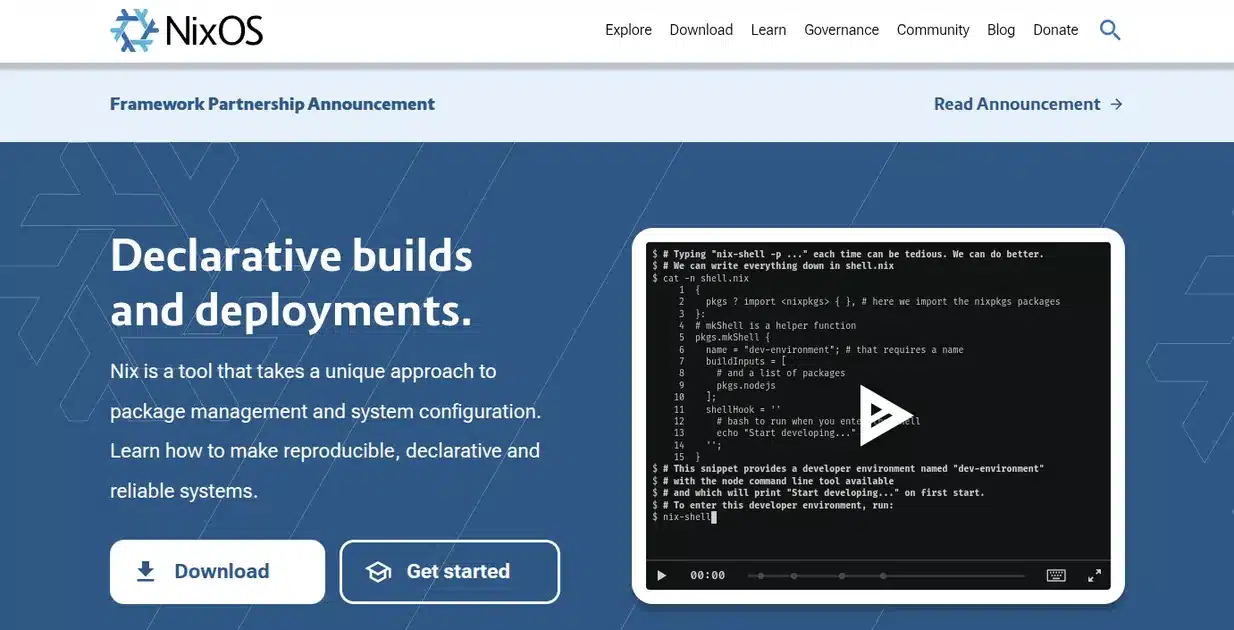
NixOS is the most radical entry on this list. Your entire system, every package, every service, every configuration, is declared in a single text file (configuration.nix). Rebuilding the system from scratch on a new machine is just copying that file.
Every change creates a new “generation.” Rolling back to any previous state takes a single reboot and a menu selection. Packages in the Nix store are never modified in place, giving you functional immutability without a read-only filesystem.
The trade-off is the learning curve. The Nix language is its own thing, and the documentation, while improving, can be dense. But for developers who want reproducible environments across machines, NixOS is unmatched.
Best for: Developers obsessed with reproducibility and declarative configuration.
Configuration: configuration.nix (declarative)
Package manager: Nix
Rollback: Via system generations at boot
Best Linux Distros for Servers
Ubuntu Server
The default choice for most cloud deployments. Every major cloud provider (AWS, GCP, Azure, DigitalOcean) offers Ubuntu images, and the majority of online tutorials assume you are using it. Ubuntu 26.04 LTS brings kernel 7.0 and native AMD ROCm for AI workloads.
Support: 5 years (extended to 15 with Ubuntu Pro)
Debian
Debian is what Ubuntu is built on. It ships with older, thoroughly tested packages, which makes it incredibly stable but occasionally inconvenient if you need a newer version of something. For production servers where uptime matters more than features, Debian is the conservative, reliable choice.
Current version: Debian 13 "Trixie"
Support: ~5 years per stable release
Rocky Linux
After CentOS was discontinued as a traditional release, Rocky Linux took its place as the go-to free RHEL clone. It offers 1:1 binary compatibility with Red Hat Enterprise Linux, making it ideal for enterprise workloads, cPanel hosting, and any stack that is certified for RHEL.
Rocky emphasises community governance, meaning no single company controls its direction.
Support: ~10 years per major release
AlmaLinux
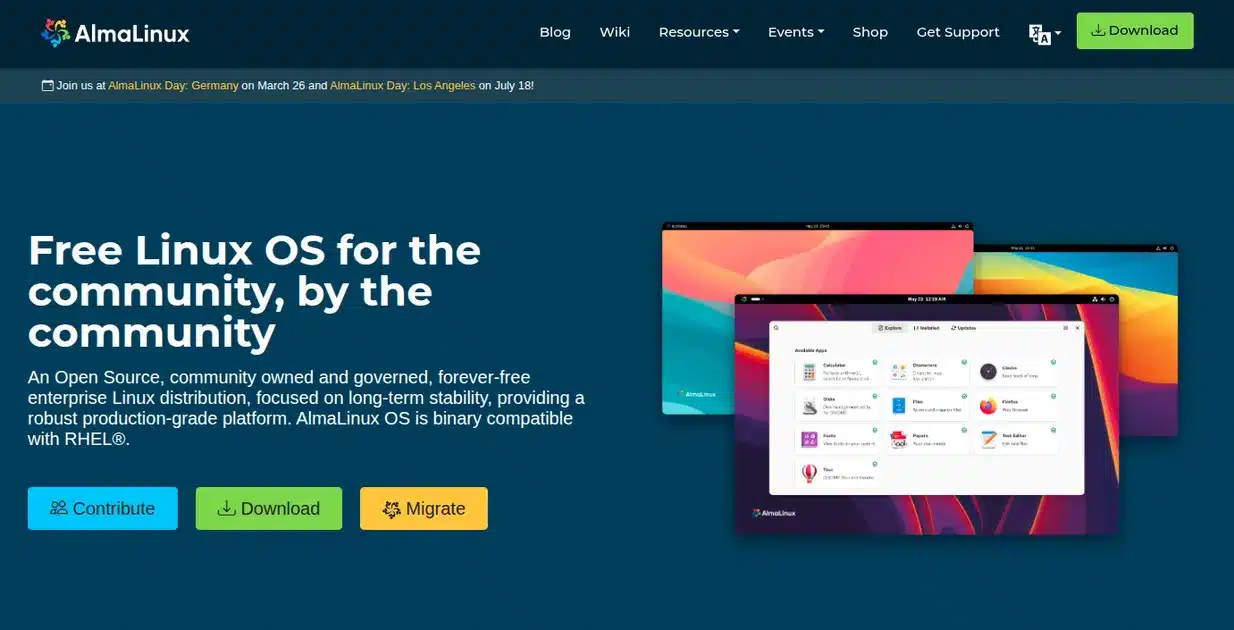
AlmaLinux serves the same role as Rocky (free RHEL clone, 1:1 binary compatible) but is backed by CloudLinux, a commercial entity with a long track record in enterprise Linux. If you want corporate backing and enterprise support options alongside a free RHEL-compatible base, AlmaLinux is the pick.
Support: ~10 years per major release
How to Choose: A Simple Decision Framework
Still unsure? Walk through these three questions:
1. What is the machine for?
Daily desktop use points you toward Mint, Ubuntu, or Fedora. Gaming points to Bazzite or Nobara. A laptop points to Fedora or Ubuntu, or Pop!_OS if it has an NVIDIA GPU. Server work means Ubuntu Server, Debian, or Rocky.
2. How old is the hardware?
Anything from the last 5-6 years will run any distro on this list. For machines over 10 years old, look at a lightweight distro: MX Linux, antiX, or Puppy Linux.
3. How much do you want to tinker?
If the answer is “not at all,” go with Mint or Ubuntu. If the answer is “I want to learn,” try EndeavourOS. If the answer is “I want to control everything,” go Arch or NixOS.
One More Tip
Every distro on this list supports “Live USB” booting. Download the ISO, flash it to a USB stick using a tool like Ventoy or balenaEtcher, and boot from it without touching your hard drive. Test the desktop, check that your Wi-Fi and speakers work, then decide. Once you are set up, our list of the best terminal (TUI) apps for Linux is a good next stop.
FAQs
Which Linux distro is best for complete beginners?
Linux Mint. It looks and feels like Windows; everything works after installation, and the community is welcoming to newcomers. Zorin OS and Ubuntu 26.04 LTS are the next best beginner picks.
What is the most lightweight Linux distro?
Among full desktop distros, antiX is one of the lightest: it runs on very old PCs with well under 1 GB of RAM and still offers 32-bit images. Puppy Linux is similar and runs entirely from RAM. If your machine has 2 GB of RAM or more, MX Linux is the better everyday lightweight distro because it feels like a complete modern desktop.
What is the best Linux distro for gaming?
Bazzite, if you want a console-like setup or use a handheld PC. Nobara, if you game on the same desktop you work on. Both come with Steam, Proton tweaks and graphics drivers ready to go.
What is the best Linux for a laptop?
Fedora Workstation or Ubuntu 26.04 LTS. Both get the newest hardware support quickly and are the distros laptop makers like Framework, Dell and Lenovo officially support. For a laptop with an NVIDIA GPU, Pop!_OS is the easiest choice.
Can I game on Linux in 2026?
Yes, for most titles. Steam’s Proton layer handles the vast majority of Windows games automatically. The notable exceptions are multiplayer games with kernel-level anti-cheat (Valorant, Fortnite). Check ProtonDB for your specific library.
Is Linux a good replacement for Windows 10?
For most home use, yes. If your PC cannot run Windows 11, Linux Mint or Zorin OS gives it a supported, secure system for years. Check that your must-have apps run (or have Linux alternatives) from a live USB first.
Is Ubuntu still relevant in 2026?
Absolutely. Ubuntu 26.04 LTS is one of the strongest releases in years, with kernel 7.0, AMD ROCm support, and the largest support ecosystem of any distro. It is the safe, reliable choice.
What is an immutable Linux distro?
A distro where the core system files are read-only. You cannot modify them during normal use, which prevents accidental breakage. Updates are applied atomically (all-or-nothing), and you can roll back instantly if something goes wrong. Fedora Silverblue and Bazzite are the most popular examples.
Which distro is best for a Raspberry Pi or ARM device?
Ubuntu Server and Raspberry Pi OS (Debian-based) are the two strongest options for ARM hardware. Fedora also offers ARM images.
Do I need an antivirus on Linux?
For desktop use, no. Linux’s permission model, repository-based software installation, and smaller attack surface make traditional antivirus software unnecessary for most users. Server administrators should focus on proper firewall configuration, regular updates, and access control instead.

Amit loves new tech and apps that make life easier, he writes about apps, games and useful websites on TheTechBasket.