On this page
- Which driver updater should you use?
- Built-in driver updaters (start here)
- Windows Update
- Device Manager
- Official graphics driver tools
- NVIDIA App
- AMD Software: Adrenalin Edition
- Intel Driver & Support Assistant
- Laptop and PC maker apps
- Dell SupportAssist
- HP Support Assistant
- Lenovo Vantage
- MyASUS
- Third-party driver updater apps: what to know
- The one exception: Snappy Driver Installer Origin
- How we chose
- FAQs
- What is the best free driver updater for Windows?
- Is Driver Booster safe?
- Does Windows 11 update drivers automatically?
- Should I update drivers if nothing is wrong?
- How do I update my graphics driver?
- What should I do if a driver update breaks something?
- Is GeForce Experience still available?
A driver is the small piece of software that lets Windows talk to your hardware: the graphics card, Wi-Fi adapter, audio chip, touchpad or printer. When a driver is old or broken you see it as stutter in games, a flickering screen, Wi-Fi that drops, or a device Windows does not recognise at all.
Search for a "driver updater for Windows" and most results push one-click apps that scan your PC and offer to fix everything. You do not need one. Windows already includes a driver updater, and the companies that make your graphics card and your laptop each give you a free official tool. This list starts with those, then covers the popular third-party apps honestly, including why we do not recommend them.
Which driver updater should you use?
| What you want | Best tool | Cost |
|---|---|---|
| Keep every driver current with no effort | Windows Update | Free, built in |
| Fix or roll back one device | Device Manager | Free, built in |
| NVIDIA GeForce or RTX graphics | NVIDIA App | Free |
| AMD Radeon graphics or Ryzen chipset | AMD Software: Adrenalin Edition | Free |
| Intel graphics, Wi-Fi, Bluetooth, chipset | Intel Driver & Support Assistant | Free |
| A Dell laptop or desktop | Dell SupportAssist | Free |
| An HP PC | HP Support Assistant | Free |
| A Lenovo PC | Lenovo Vantage | Free |
| An ASUS laptop | MyASUS | Free |
| An old or offline PC | Snappy Driver Installer Origin | Free, open source |
Built-in driver updaters (start here)
1. Windows Update
Built in · BEST OVERALL
Windows Update is the driver updater most people should use. Important drivers install automatically along with regular updates. Everything else waits in a separate list so you choose what goes on your PC.
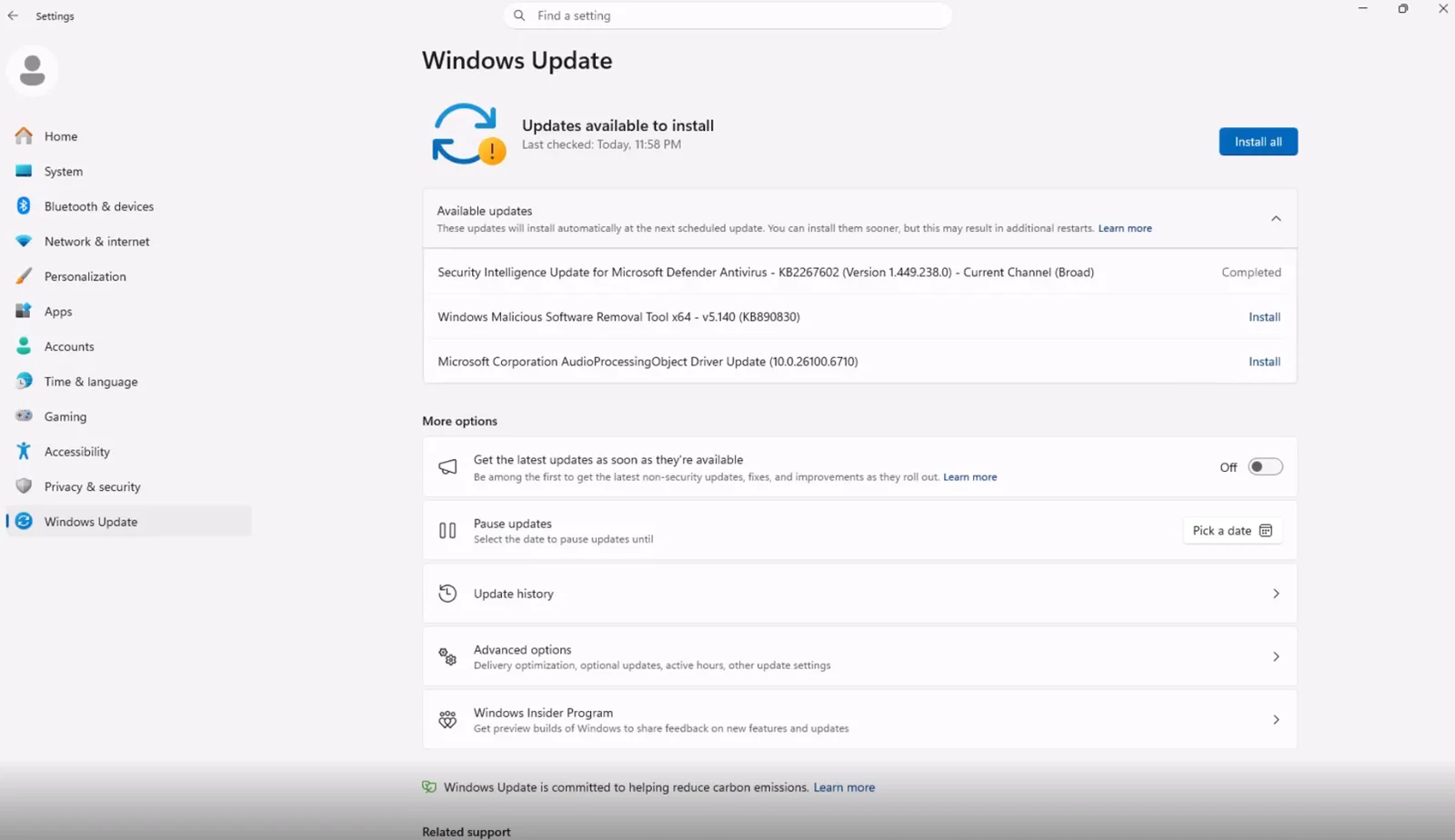
To see those extra drivers on Windows 11, open Settings > Windows Update > Advanced options > Optional updates, then expand Driver updates. On Windows 10 it is Settings > Update & Security > Windows Update > View optional updates.
Drivers here come from the hardware makers and are tested for Windows before Microsoft ships them. The trade-off is speed: graphics drivers in particular often arrive weeks after NVIDIA, AMD and Intel publish them. Only install an optional driver when it matches a device that is giving you trouble.
Still on Windows 10? It reached end of support on October 14, 2025. Driver updates through Windows Update still work, but the long-term fix is moving to Windows 11.
- Runs on
- Windows 11 and Windows 10
- Difficulty
- Easy
- Skip if
- You need a graphics driver for a game released this week
- Price
- Free
2. Device Manager
Built in
Device Manager lists every piece of hardware Windows knows about. Right-click the Start button and choose Device Manager to open it.
It is the tool for one device at a time:
- Update a driver: right-click the device > Update driver > Search automatically for drivers, or Browse my computer for drivers if you downloaded one from the manufacturer.
- Roll back a bad update: right-click the device > Properties > Driver tab > Roll Back Driver.
- Spot problems: a yellow warning triangle or an Unknown device entry means a missing or broken driver.
Device Manager is also how you install a driver by hand when your network adapter has no working driver and you copied the files over on a USB drive.
- Runs on
- Every version of Windows
- Difficulty
- Easy
- Skip if
- Nothing is broken
- Price
- Free
Official graphics driver tools
Graphics drivers are the ones worth keeping current, and the GPU makers release them before Windows Update does. Not sure which card you have? Open Task Manager (Ctrl + Shift + Esc), select Performance, then GPU. Many laptops have two GPUs, so update both.
3. NVIDIA App
NVIDIA GPUs
The NVIDIA App is NVIDIA's current tool for GeForce and RTX cards. It replaced GeForce Experience when it left beta in November 2024.
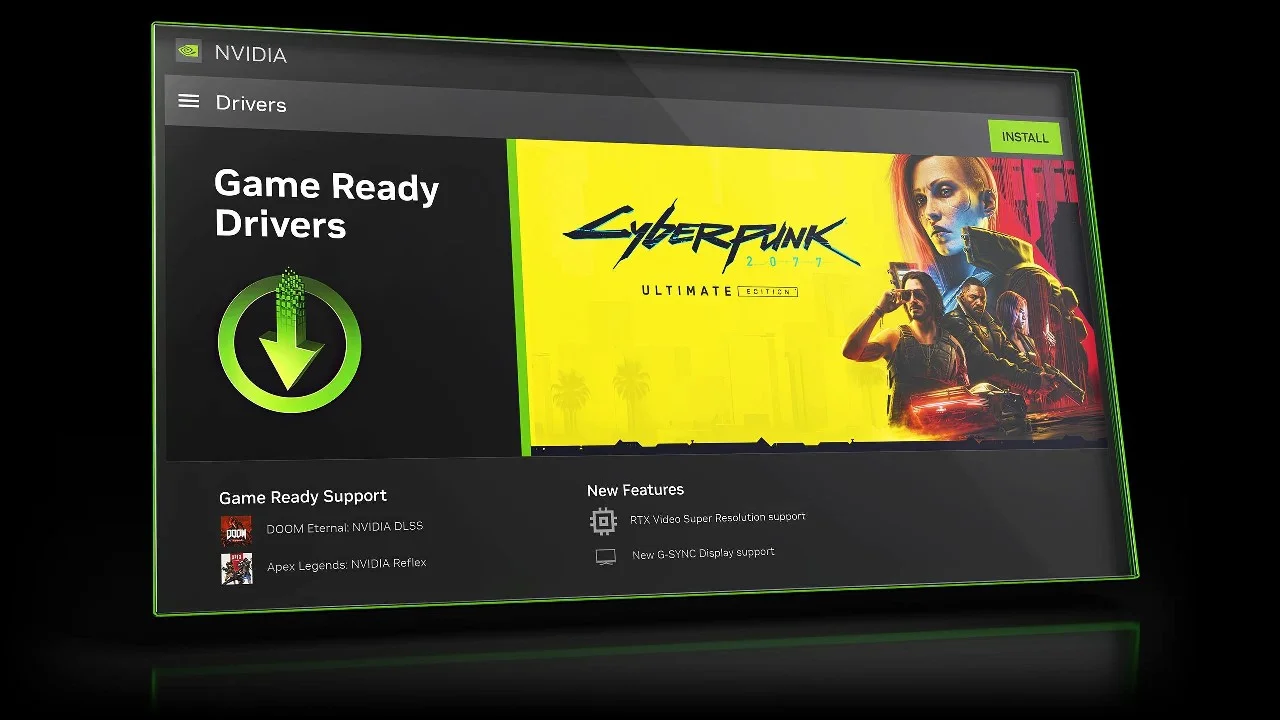
Open Drivers, select Check for updates, then download and install. You can pick Game Ready drivers (tuned for new game releases) or Studio drivers (aimed at stability in creative apps like Premiere Pro, Blender and DaVinci Resolve). The Custom install option includes a clean install, which is worth using when you are fixing a problem rather than just updating.
- Replaces
- GeForce Experience
- Runs on
- GeForce and RTX graphics cards
- Difficulty
- Easy
- Price
- Free
4. AMD Software: Adrenalin Edition
AMD GPUs
AMD ships its Radeon drivers together with AMD Software: Adrenalin Edition.
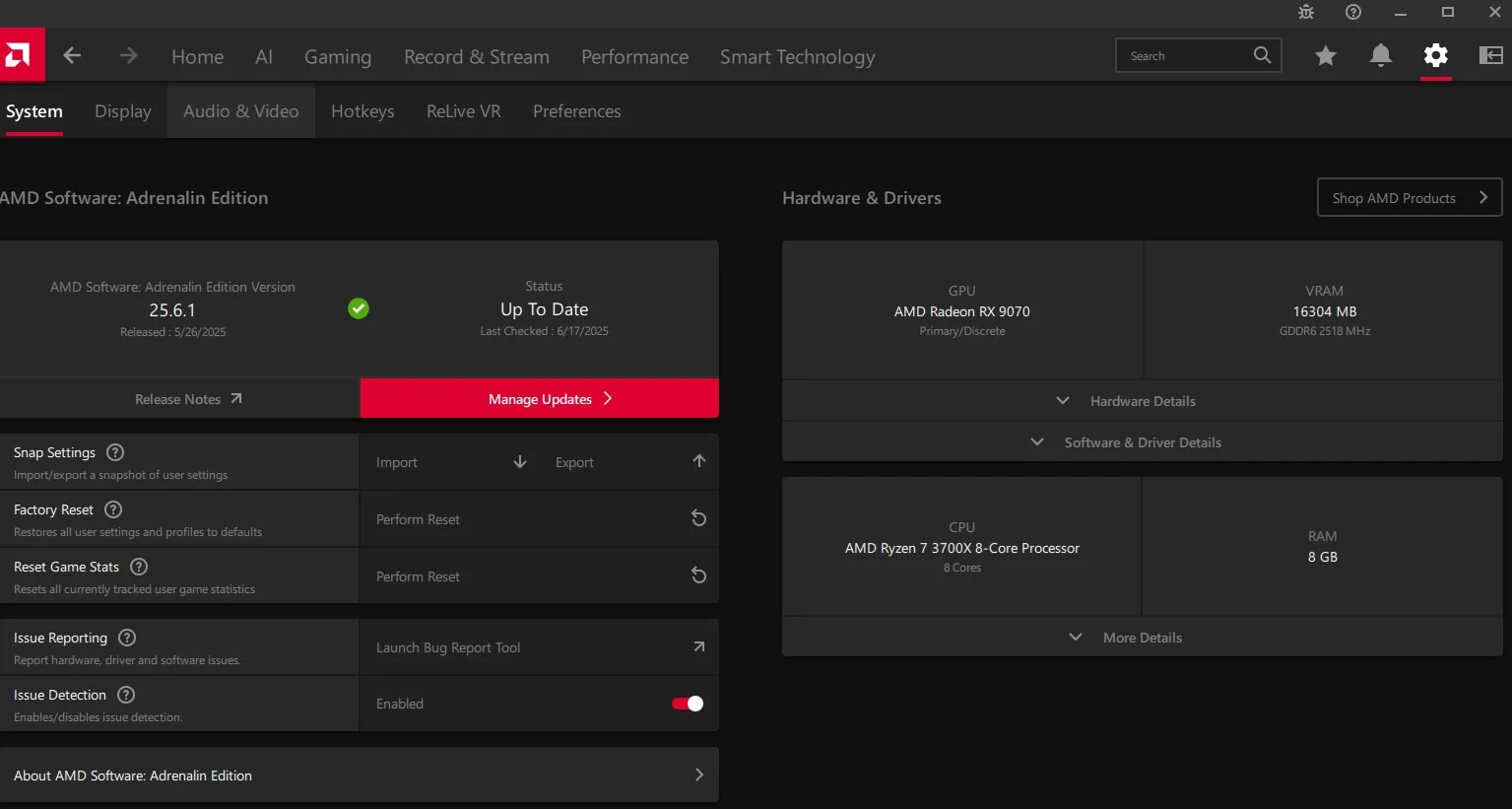
If it is already installed, open it, go to the System tab and select Manage Updates to check for a newer driver.
If not, AMD's drivers page lets you search for your exact card or processor, or download the Auto-Detect and Install tool, which identifies your Radeon graphics and Ryzen chipset and fetches the right drivers. The installer's Factory Reset option removes the old driver and settings first, which is AMD's version of a clean install.
- Runs on
- Radeon graphics and Ryzen chipsets
- Difficulty
- Easy
- Price
- Free
5. Intel Driver & Support Assistant
Intel hardware
Most laptops use Intel graphics built into the processor, and many also use Intel Wi-Fi and Bluetooth. Intel Driver & Support Assistant (Intel DSA) scans your PC and lists updates for all of that Intel hardware in one place, so it covers more than graphics.
On some laptops, Intel DSA will tell you a driver is customised by your laptop maker and send you there instead. That is expected: the maker's version may include fixes for that model's display, battery or audio.
- Runs on
- Intel graphics, Arc, Wi-Fi, Bluetooth, chipset
- Difficulty
- Easy
- Price
- Free
Laptop and PC maker apps
If you own a laptop or a prebuilt desktop from a big brand, its own support app is the best all-in-one driver updater you can get. It knows your exact model, so it offers the BIOS, chipset, audio, touchpad and Wi-Fi drivers that were tested on it, not a generic version that merely matches the chip. Most come preinstalled; if you removed yours, reinstall it from the maker's site.
6. Dell SupportAssist
Dell and Alienware
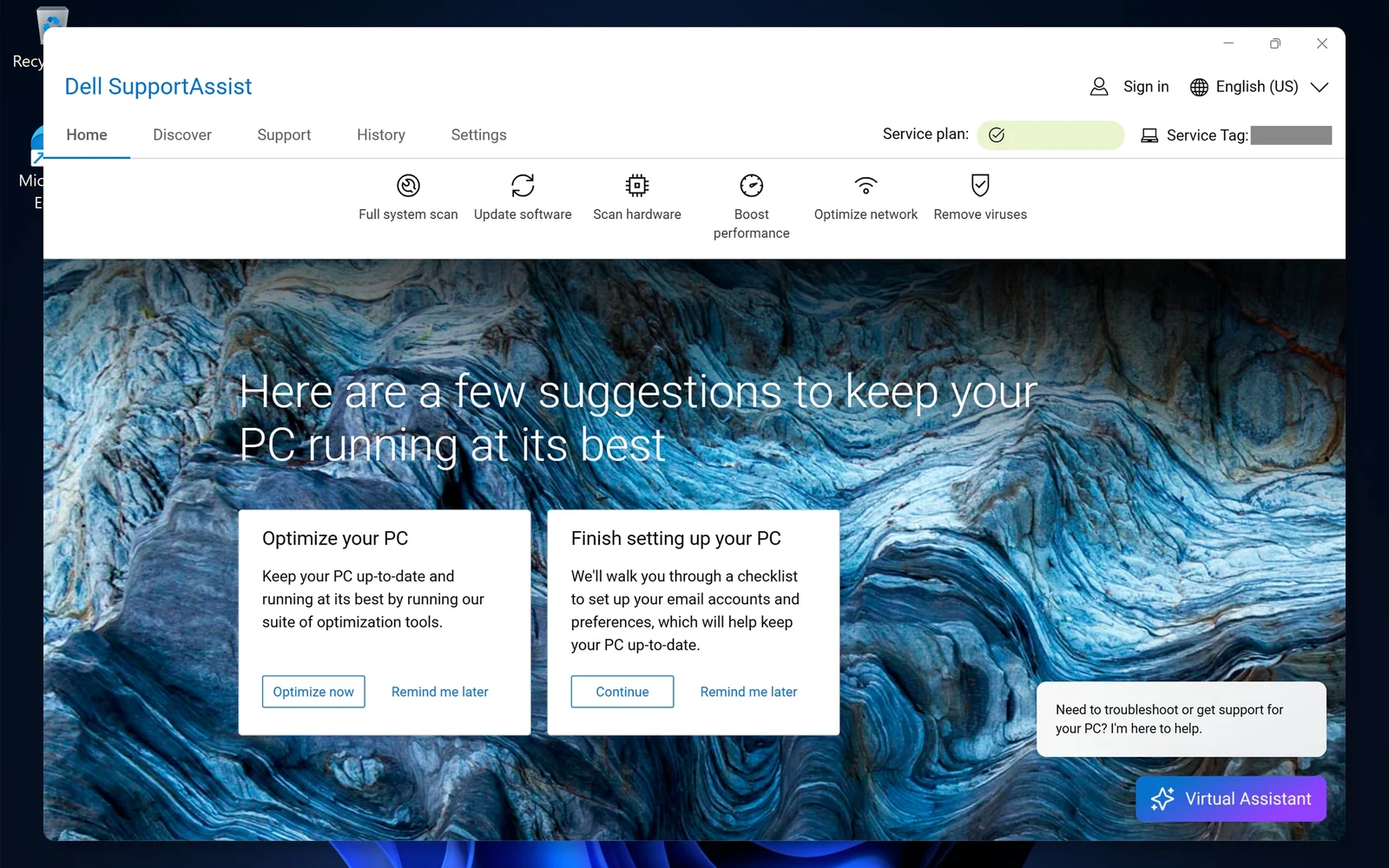
SupportAssist for Home PCs comes preinstalled on Dell computers. Open it and choose Update software to check for driver and software updates, or run Scan hardware to test the PC. The core tools are free. Dell Care Premium is the paid upgrade, and you can ignore it.
- Runs on
- Dell PCs on Windows 10 (1809+) and Windows 11
- Difficulty
- Easy
- Skip if
- You do not own a Dell
- Price
- Free
7. HP Support Assistant
HP PCs
HP Support Assistant handles driver, BIOS and firmware updates on HP laptops, desktops and printers. It is usually preinstalled. If you removed it, reinstall it from HP's support page, not from a third-party download site.
- Runs on
- HP laptops, desktops and printers
- Difficulty
- Easy
- Skip if
- You do not own an HP
- Price
- Free
8. Lenovo Vantage
Lenovo PCs
Lenovo Vantage (also in the Microsoft Store) combines hardware settings with update management, and Lenovo offers it free. The older standalone Lenovo System Update is on its way out: Lenovo says its maintenance ends on October 31, 2026, and recommends moving to Lenovo Commercial Vantage by March 31, 2027. That advice is aimed at business fleets, so a home user should simply use Lenovo Vantage.
- Runs on
- Lenovo and ThinkPad PCs
- Difficulty
- Easy
- Skip if
- You do not own a Lenovo
- Price
- Free
9. MyASUS
ASUS laptops
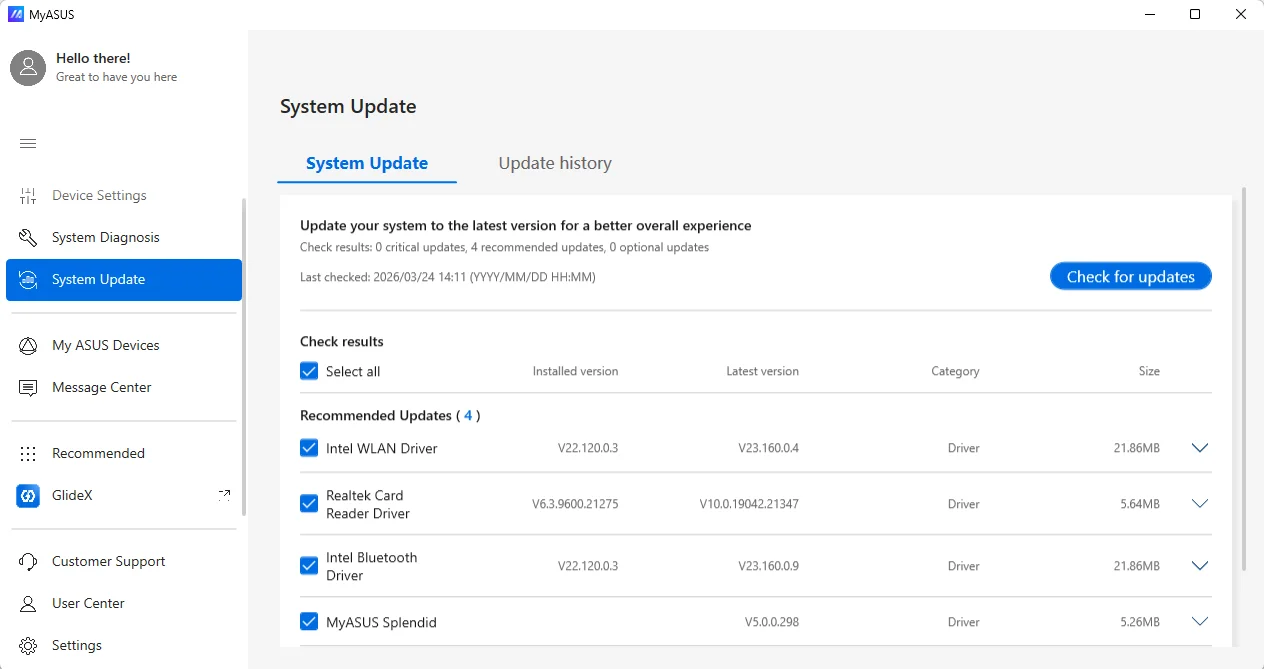
MyASUS puts driver and BIOS updates under System Update. Select Check for updates, tick what you want, and install. Updates are sorted into critical, recommended and optional, so you can skip the optional ones.
- Runs on
- ASUS laptops
- Difficulty
- Easy
- Skip if
- You do not own an ASUS laptop
- Price
- Free
Other brands such as Acer and MSI publish drivers on their support sites: enter your serial number or model and download from there. Built your own PC? Your motherboard maker's support page has the chipset, audio and LAN drivers, and the GPU tools above cover the rest.
Third-party driver updater apps: what to know
These are the apps most "best driver updater" lists recommend. The names you will see most are Driver Booster (IObit), Driver Easy, DriverMax, Driver Talent, Avast Driver Updater and Outbyte Driver Updater. They all promise the same thing: scan your PC, find outdated drivers, update everything in one click.
We do not recommend any of them for a home PC. Here is why.
If you already installed one, nothing is necessarily wrong. Check Settings > Apps > Installed apps for anything you did not ask for, uninstall the driver updater, and let Windows Update handle drivers from now on. If a driver it installed is causing trouble, roll it back in Device Manager.
10. The one exception: Snappy Driver Installer Origin
For technicians
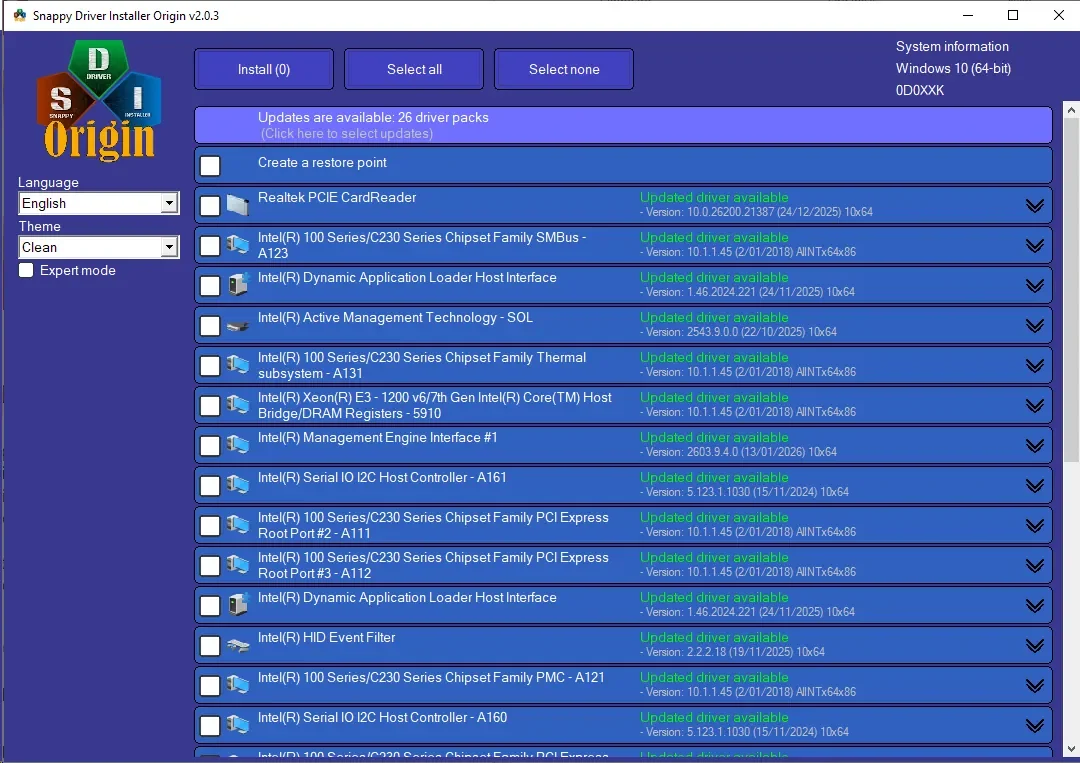
Snappy Driver Installer Origin (SDIO) is different from the apps above: it is free, open source, has no ads or upsells, and is still maintained on its official site.
Its real use is offline. Technicians download its large driver packs once, then carry them on a USB drive to set up PCs that have no working network driver. It still uses generic drivers matched by chip, so the "wrong driver" risk above applies, and it is not something a home user needs when Windows Update and their PC maker's app are available.
- Runs on
- Windows, runs portable
- Difficulty
- Advanced
- Licence
- Open source
- Skip if
- You have a working internet connection and a normal home PC
- Price
- Free
How we chose
We judged each option on four things: where the drivers come from (Microsoft or the hardware maker first), whether it can harm a working PC, whether it costs money or pushes extras, and how easy it is for a non-technical reader. Every tool name and download page here was checked on the official site in October 2026.
For other trustworthy maintenance tools, see our list of Windows utilities worth using, and if a PC is slow to boot, disable startup programs before blaming drivers. If you prefer the command line, driverquery in Command Prompt lists every installed driver with its date (more in our roundup of useful CMD commands). And if a driver problem has left Windows unstable beyond repair, a factory reset is the last resort.
FAQs
What is the best free driver updater for Windows?
Windows Update. It is built in, free, and delivers drivers from the hardware makers after Microsoft tests them. Add the NVIDIA App, AMD Software: Adrenalin Edition or Intel Driver & Support Assistant for graphics, and your laptop maker's app for model-specific drivers.
Is Driver Booster safe?
Driver Booster is a real product from IObit, not malware, but we do not recommend it. Like most one-click driver updaters, it can install generic drivers that are not tuned for your model, pushes a paid Pro version, and its scans tend to make a working PC look broken. Windows Update and the official tools do the job without those risks.
Does Windows 11 update drivers automatically?
Yes. Windows Update installs important drivers automatically. Other drivers appear under Settings > Windows Update > Advanced options > Optional updates > Driver updates, where you choose which ones to install.
Should I update drivers if nothing is wrong?
Usually not. If a device works, a newer driver rarely adds anything you will notice. The main exceptions are graphics drivers for new games, and security fixes your PC maker or Windows Update flags for you.
How do I update my graphics driver?
Find your GPU in Task Manager (Performance > GPU), then use the matching official tool: the NVIDIA App for NVIDIA, AMD Software: Adrenalin Edition for Radeon, or Intel Driver & Support Assistant for Intel graphics.
What should I do if a driver update breaks something?
Open Device Manager, right-click the device, select Properties > Driver > Roll Back Driver, and restart. If that button is greyed out, uninstall the device, restart, and install an older driver from the manufacturer's site, or use System Restore.
Is GeForce Experience still available?
NVIDIA replaced GeForce Experience with the NVIDIA App in November 2024. New driver packages install the NVIDIA App instead, so use that for NVIDIA driver updates.

Amit loves new tech and apps that make life easier, he writes about apps, games and useful websites on TheTechBasket.